Introduction
LED screens are widely used in event production because they can display presentations, promotional videos, live footage, animations and branded content on large, bright displays. From concerts and corporate conferences to exhibitions, weddings, fashion shows and product launches, LED screens help event organisers deliver visual messages to audiences in engaging ways.
Behind the display is a technical system that transfers image information from the content source to the LED panels. One component used in many professional LED display systems is the LED sending card. This component helps transmit processed display data to compatible LED receiving cards, which then distribute the information to the LED modules.
An LED sending card is a specialist component, and its suitability depends on the controller, receiving cards, LED panels and the wider display architecture. Selecting a compatible unit is essential for achieving the intended screen configuration and avoiding technical problems during an event.
Janeson Rentals provides event equipment hire and rental solutions in Nairobi, Kenya. If your production requires LED display control components, you can enquire about equipment availability and discuss your system requirements before booking.
Whether you are an event organiser, audiovisual technician, production company or corporate event planner, understanding the role of an LED sending card can help you plan an LED display setup more effectively.
What Is an LED Sending Card?
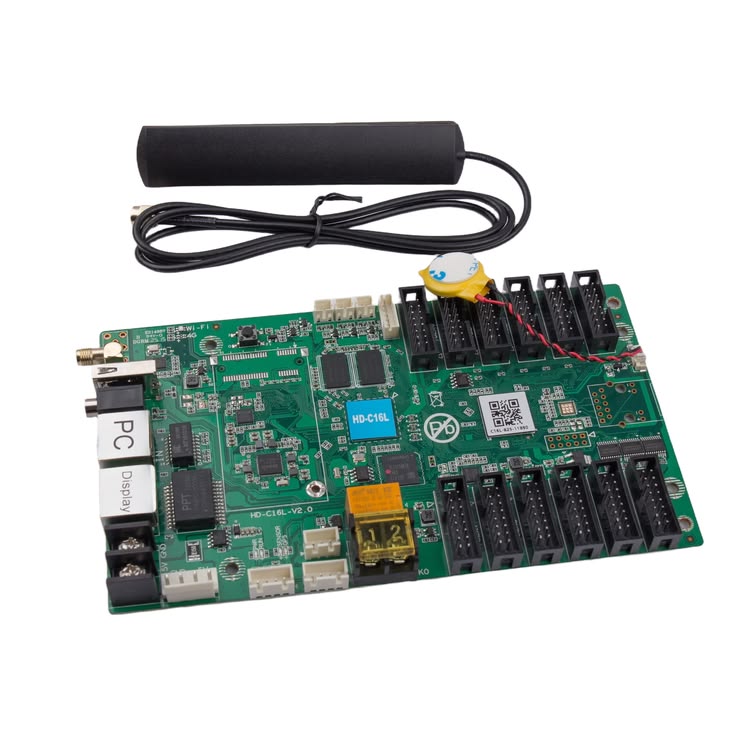
An LED sending card is an electronic component used in many LED display systems to transmit image data from a compatible computer, video processor or control system to the receiving equipment connected to the LED screen.
In a typical system, the incoming video signal is processed by a controller or video processor. The sending card then transmits display data through the supported data connections to receiving cards installed in the LED cabinets or display modules.
The receiving cards use this information to control the relevant LED display components. The sending card and receiving cards must work with compatible control hardware, software and firmware.
The exact functions and connections depend on the manufacturer and product model. Some systems integrate sending-card functionality into a larger controller or processor, while other systems use separate components.
Because sending cards are not universally interchangeable, event organisers should confirm the display system’s brand, model, resolution, data requirements and control architecture before requesting a replacement or rental unit.
Why an LED Sending Card Is Important
1. Transmits Display Data
The sending card plays a role in delivering the data required for the LED screen to display the intended content. Without a compatible and correctly configured data-transmission system, the LED panels may not display the expected image.
The sending card must be suitable for the display system and configured according to the manufacturer’s instructions.
2. Supports the LED Display Configuration
LED screens are assembled in different configurations, ranging from compact displays to large stage screens made up of multiple cabinets. The sending card must support the required screen configuration within the limits of the relevant hardware and software.
The technical team should verify the supported pixel capacity, data outputs, connection requirements and display mapping before installation.
3. Works With Compatible Receiving Cards
A sending card is part of a wider control chain. It communicates with receiving cards that distribute display data to the LED panels.
Compatibility between the sending card, receiving cards and control software is essential. Using components that are not designed to work together may lead to configuration errors or an unusable display.
4. Supports Professional Event Visuals
Events rely on LED screens to display content accurately and at the right time. Concert visuals, conference slides, live camera feeds, sponsor messages and promotional videos all depend on a functioning display system.
A correctly configured sending card can support the data flow needed for these visuals to appear on compatible LED panels.
5. Helps With Equipment Maintenance and Replacement
For audiovisual production companies, a compatible sending card may be needed when maintaining or replacing components within an existing LED screen system.
Before arranging a replacement, technicians should identify the original component and confirm the exact compatibility requirements. A card that looks similar may still have different firmware, data outputs or supported configurations.
6. Supports Flexible LED Display Applications
LED displays are used in temporary event installations, exhibitions, retail displays, outdoor advertising and permanent indoor installations. Sending cards form part of many systems used for these applications.
The appropriate unit depends on the display’s technical design rather than simply the event type or physical screen size.
Events That Use LED Displays With Sending Cards
An LED sending card is a technical component rather than a standalone event feature. Its role becomes relevant wherever the LED screen system it supports is used.
Concerts and Music Festivals
Concerts often feature large LED displays showing live camera feeds, stage visuals, animations and sponsor content. The screen may consist of many interconnected LED cabinets.
The production team must configure the control system and data connections to match the display. Sending-card compatibility and correct configuration help support the intended screen output.
Corporate Conferences and Seminars
Conference organisers use LED screens for presentations, speaker information, company branding and live video feeds. Sending cards may be part of the LED system that delivers these visuals.
Before the event, technicians should test the entire signal chain, from the laptop or media source through the processing equipment and sending card to the LED panels.
Product Launches
Product launches often use high-resolution videos, product demonstrations and brand animations. An LED display system must be configured to support the content and screen layout.
The sending card should be compatible with the control system and receiving hardware used in the installation.
Exhibitions and Trade Shows
Exhibitors use LED screens to attract attention, communicate product features and display promotional material. A correctly configured control system helps ensure the content is delivered to the intended screen area.
The required sending card depends on the LED display equipment selected for the stand.
Fashion Shows
Fashion shows use LED screens to display designer names, collection visuals, sponsor messages and live runway footage. The display system may need to support specific screen dimensions and content formats.
Production technicians should verify the sending card’s compatibility with the existing display hardware before the event.
Weddings and Private Celebrations
LED screens at weddings and private events may display photographs, videos, live footage and personalised messages. The sending card is one of the technical components that may be involved in delivering this content to the display.
Testing is important when the event relies on prepared videos or time-sensitive visual sequences.
Church Conferences and Religious Events
Churches may use LED screens for lyrics, scripture, announcements, presentations and live camera feeds. Where the display system uses separate sending and receiving cards, both must be compatible and properly configured.
How to Choose the Right LED Sending Card
Choosing an LED sending card requires accurate technical information. The following factors should be considered before hiring or replacing a unit.
Manufacturer and model: Identify the brand and model of the existing LED control system. This is one of the most important details when checking compatibility.
Controller compatibility: Confirm that the sending card works with the controller or processor used in the display system.
Receiving-card compatibility: Check that the sending card supports the receiving cards installed in the LED cabinets or panels.
Pixel capacity: Establish the total pixel resolution and display configuration the sending card needs to support. The required capacity depends on the screen arrangement and the specifications of the hardware.
Data outputs and connections: Verify the type and number of outputs, supported data rates and connection requirements.
Software and firmware: Some cards require specific configuration software, drivers or firmware versions. These requirements should be checked before installation.
Display mapping: The sending card and associated control software must be configured to match the physical arrangement of the LED panels.
Technical support: A qualified LED technician should verify the system and configure the component where necessary.
Availability of replacement parts: If the card is required to repair an existing system, provide the exact model number and details of the problem before making a rental enquiry.
These checks help reduce the risk of obtaining a component that cannot operate with the existing LED screen system.
LED Sending Card Hire Versus Buying
The decision to hire or purchase an LED sending card depends on how the component will be used.
When Hiring May Be Appropriate
Hiring may be useful when a production requires a compatible component for a specific event, a temporary setup or a short-term equipment requirement. It may also be worth enquiring about rental availability when additional components are needed for a particular project.
However, because sending cards are highly system-specific, availability and compatibility must be confirmed before a rental is agreed.
When Buying May Be Appropriate
Purchasing may be practical for LED rental companies, technical service providers and production businesses that maintain their own display systems. Ownership can provide convenient access to a compatible spare component when needed.
The buyer must still ensure that the unit matches the system and that any required software or firmware is available.
What to Consider Before Deciding
Compare the frequency of use, compatibility requirements, purchase cost, rental charges, maintenance needs and availability. If the component is needed to restore a screen before a major event, allow time for technical testing and configuration.
Janeson Rentals can be contacted to discuss event equipment requirements and establish whether the specific component is available for hire.
Why Choose Janeson Rentals?
Janeson Rentals is an event equipment hire and rental company based in Nairobi, Kenya, serving event requirements in Nairobi and across the country. Organisers can enquire about equipment for conferences, concerts, exhibitions, corporate functions, product launches and private celebrations.
Practical Equipment Enquiries
LED sending cards require specific technical information. Providing the make and model of your existing system, along with the event date and intended use, helps clarify the equipment required.
Support for Different Event Productions
Different productions use LED screens in different ways. A concert may need a large display for live visuals, while a conference may require screens for presentations and branding. Technical equipment should be selected according to the actual display system.
Nairobi-Based Rental Enquiries
Event organisers in Nairobi can contact Janeson Rentals to discuss their requirements. If your event is elsewhere in Kenya, confirm transport, delivery timing and availability in advance.
Flexible Options for Temporary Requirements
Hiring may be an alternative to purchasing equipment for a one-off project, provided that a compatible unit is available and the rental terms meet your needs.
Emphasis on Compatibility
The most important consideration when sourcing an LED sending card is whether it works with the existing control system. Sharing the relevant technical specifications helps prevent mismatches and supports better planning.
How to Enquire About an LED Sending Card Rental
Use the following steps when contacting a supplier about an LED sending card.
- Identify your display system: Provide the LED screen brand, model and control-system details.
- Check the existing component: If you are replacing a card, record the part number and any relevant hardware or firmware information.
- Describe the required configuration: Share the screen resolution, cabinet arrangement and receiving-card model where available.
- Explain the intended use: State whether the card is required for a new installation, a temporary event or a replacement.
- Provide event details: Include the event date, venue and rental duration.
- Confirm compatibility and availability: Ask the technical team to verify the component before finalising the booking.
- Arrange testing: Ensure the unit is configured and tested by a qualified technician before the event.
For a major production, begin the enquiry early enough to allow time for compatibility checks, testing and any necessary adjustments.
Frequently Asked Questions
1. What is an LED sending card?
An LED sending card is a component in many LED display systems that transmits processed display data to compatible receiving cards connected to LED panels or cabinets.
2. Can I hire an LED sending card in Nairobi?
You can enquire with Janeson Rentals about LED sending card hire in Nairobi. Availability must be confirmed for the specific make and model you require.
3. Is an LED sending card the same as a receiving card?
No. A sending card transmits display data through the control system, while receiving cards process the data for the relevant LED cabinets or panels. Both must be compatible with the wider system.
4. Can any sending card work with my LED screen?
No. Compatibility depends on the manufacturer, control hardware, receiving cards, software, firmware, data connections and display configuration. Check the technical specifications before sourcing a replacement.
5. Does every LED screen need a separate sending card?
Not necessarily. The required number and arrangement of sending cards depend on the control-system design, screen resolution, data capacity and the equipment being used. Some systems integrate sending functionality into other hardware.
6. What information should I provide when requesting a sending card?
Provide the manufacturer, model number, control-system details, receiving-card model, screen configuration and intended use. If the component is needed for an event, also include the event date and venue.
7. Should an LED sending card be configured by a technician?
Yes, professional configuration is recommended. A qualified technician can verify compatibility, install the component correctly and test the signal path before the screen is used.
Enquire About LED Sending Card Hire With Janeson Rentals
LED sending cards are specialised components that help many professional LED display systems deliver visual content to their panels. Choosing a compatible unit is essential for a reliable setup, whether the screen is being used at a concert, conference, exhibition, fashion show, product launch or private event.
Contact Janeson Rentals to enquire about LED sending card hire and rental in Nairobi and across Kenya. Share the model number, control-system details, screen configuration and event date so that availability and compatibility can be assessed.
Plan your LED display requirements carefully and verify the complete system before the event to help deliver a smooth visual presentation.