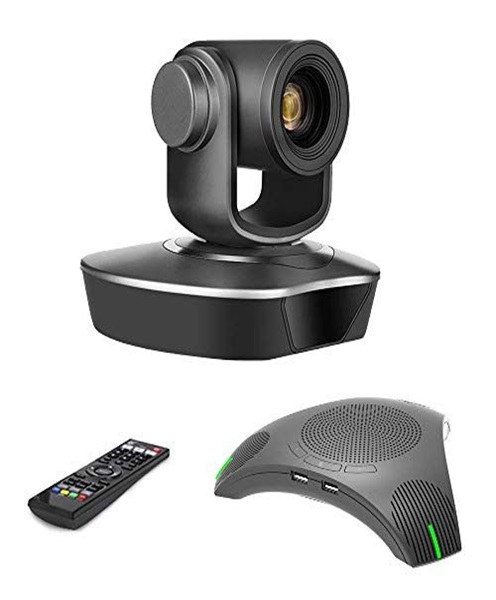
Video Conferencing Camera Hire and Rental in Kenya
Video conferencing has become an important part of professional communication. Businesses, educational institutions, event organisers and organisations regularly connect people across different locations through virtual meetings and hybrid events. A suitable video conferencing camera helps participants see presenters, colleagues and meeting activities, creating a more engaging communication experience.
At Janeson Rentals, we provide video conferencing camera hire and rental in Kenya for clients organising corporate meetings, boardroom discussions, hybrid conferences, webinars, workshops, online training sessions and other professional events.
Whether you are preparing a meeting room in Nairobi, organising a business conference or setting up a temporary virtual meeting space at an event venue, hiring a suitable video conferencing camera can help improve the visual quality of your communication setup.
Video conferencing cameras are designed to work with compatible computers, conferencing platforms and audiovisual systems. Depending on the model, they may provide wide-angle coverage, high-definition video, autofocus, automatic exposure, remote camera control and other functions that support professional meetings.
Choosing video conferencing camera rental from Janeson Rentals offers a flexible way to access equipment when needed without necessarily purchasing a permanent camera system. Our hire services support clients in Nairobi and across Kenya who require audiovisual equipment for different professional occasions.
What Is a Video Conferencing Camera?
A video conferencing camera is a camera designed to capture video during online meetings, virtual discussions and hybrid communication sessions.
It allows people participating remotely to see individuals in a physical meeting room. Depending on the equipment and software being used, the camera may capture one presenter, several participants or a wider view of the entire meeting space.
Video conferencing cameras come in different designs and configurations. Some are compact cameras intended for personal workstations or small meeting rooms. Others are designed for boardrooms, conference halls and larger professional environments.
Common camera types include:
-
USB video conferencing cameras: Connect to compatible computers through USB and provide video for supported conferencing applications.
-
PTZ video conferencing cameras: Allow remote pan, tilt and zoom adjustments for flexible camera coverage.
-
All-in-one conferencing cameras: Combine a camera with other features, such as microphones and speakers, depending on the model.
-
Professional network cameras: Use supported network connections and may be integrated into more advanced audiovisual systems.
The most suitable option depends on the meeting environment, number of participants, required camera coverage and available equipment.
Why Hire a Video Conferencing Camera?
Not every organisation needs to purchase and maintain its own professional video conferencing equipment. Some businesses require cameras only for occasional meetings, temporary projects or special events.
Video conferencing camera hire provides a practical solution for these situations.
Reduce Equipment Purchase Costs
Professional video conferencing cameras vary in price depending on their features and capabilities.
For organisations that only need equipment for a short period, purchasing may not be the most economical option. Hiring allows clients to access suitable equipment without making a permanent investment.
Support Temporary Meeting Arrangements
Businesses and event organisers often use hotels, conference centres, rented offices and temporary venues for meetings.
These spaces may not have the necessary video conferencing equipment. Renting a camera allows organisers to prepare the room for remote participation.
Choose Equipment According to the Meeting
A small team meeting has different camera requirements from a large corporate conference.
Hiring makes it possible to consider the room size, number of participants and required camera functionality before selecting suitable equipment.
Avoid Long-Term Storage Responsibilities
Professional audiovisual equipment requires safe storage and careful handling.
For organisations that host occasional events, renting a video conferencing camera avoids the need to maintain equipment that may remain unused for extended periods.
Improve Professional Communication
A suitable video conferencing camera can help remote participants see the people speaking and follow presentations more easily.
This is particularly important during stakeholder meetings, corporate discussions, training sessions and business presentations where visual communication supports the meeting’s objectives.
Events and Applications That Require Video Conferencing Camera Rental
Video conferencing cameras are useful in many different professional environments.
Corporate Meetings
Businesses frequently conduct meetings involving employees, executives, partners and clients who may be located in different places.
A video conferencing camera helps connect the physical meeting room with remote participants, allowing them to follow the discussion visually.
Boardroom Meetings
Boardroom meetings often involve important discussions, presentations and decision-making sessions.
A suitable camera can capture participants around a meeting table and provide a video feed to people joining remotely. The camera’s field of view should match the size and layout of the room.
Hybrid Conferences
Hybrid conferences bring together in-person and virtual audiences.
A video conferencing camera helps capture the speakers and physical audience, allowing remote participants to follow the programme. Larger events may require several cameras and a video switching arrangement.
Webinars
Webinars are used for professional presentations, product demonstrations, educational sessions and business communication.
A video conferencing camera can capture the presenter while compatible software manages the online session.
Online Training
Training providers and businesses may organise virtual training programmes for employees, customers or professional groups.
A suitable camera helps capture the trainer and can be integrated with screen-sharing and presentation tools.
Seminars and Workshops
Seminars and workshops often include speakers, demonstrations and discussions.
Video conferencing camera rental can support sessions where participants need to join remotely or where the programme is being recorded through a compatible system.
Interviews and Virtual Recruitment
Recruitment teams may conduct interviews with candidates who are not physically present.
A suitable camera can support professional video interviews by capturing the interviewer and meeting environment clearly.
Institutional Meetings
Educational institutions, associations, organisations and professional groups may hold meetings involving members from different locations.
Video conferencing cameras help make these sessions more accessible to remote participants.
Important Features to Consider When Hiring a Video Conferencing Camera
The best video conferencing camera depends on how it will be used. Before selecting equipment, consider the following features.
Video Resolution and Image Quality
Video resolution affects the amount of visual detail captured by the camera.
Different models support different resolutions and frame rates. The appropriate option depends on the conferencing platform, computer, network and display being used.
It is also important to consider lighting conditions, camera positioning and the distance between the camera and participants.
Field of View
The field of view determines how much of the room appears in the camera image.
A wide field of view is useful when several people need to appear in the same frame. A narrower view may be appropriate for a single presenter or a smaller meeting space.
The seating arrangement should be considered when choosing a camera.
Autofocus
Autofocus helps maintain a clear image when the subject moves or the camera framing changes.
This can be useful in meetings where presenters stand, move around or demonstrate products.
Zoom Functionality
Some video conferencing cameras provide zoom capabilities that allow the operator to adjust the framing.
Optical zoom uses the camera lens to magnify the subject, while digital zoom enlarges part of the image electronically. The results depend on the camera’s design and specifications.
For larger conference venues, zoom capability may be particularly useful when presenters are positioned far from the camera.
Automatic Framing
Some camera models include automatic framing or speaker-tracking functions.
These features may help adjust the camera view according to the position of participants or the active speaker. Availability and performance vary between models, and the feature should not be assumed to exist on every conferencing camera.
Microphone and Speaker Integration
Some video conferencing cameras include built-in microphones and speakers, while others require separate audio equipment.
For a small meeting, an integrated system may be sufficient. Larger meetings often benefit from dedicated conference microphones and suitable speakers.
Connectivity
Video conferencing cameras use different connection methods depending on their design.
Possible connections include USB, HDMI, Ethernet and other supported interfaces. Some models connect directly to computers, while others may require additional video capture or control equipment.
Always confirm compatibility with the intended computer and conferencing system before hiring.
Video Conferencing Camera Hire for Corporate Events in Nairobi
Nairobi is a major centre for corporate meetings, business conferences, workshops, seminars and professional training events.
Organisations hosting these activities may need to connect physical attendees with remote participants. Video conferencing camera rental provides an opportunity to create a suitable meeting environment without purchasing permanent equipment.
A typical professional video conferencing setup may include:
-
Video conferencing camera for capturing participants and presenters.
-
Laptop or computer for running the conferencing platform.
-
Conference microphones for capturing speech.
-
Speakers or headphones for audio playback.
-
Television or projector for displaying remote attendees.
-
Reliable internet connection.
-
Appropriate lighting for the meeting area.
For larger hybrid conferences, the setup may also require PTZ cameras, video switchers, capture cards, audio mixers and streaming equipment.
The correct combination depends on the event’s size, format and technical requirements.
Combining a Video Conferencing Camera with Other Equipment
A video conferencing camera is most effective when the entire audiovisual arrangement is planned properly.
Conference Microphone Systems
Clear speech is essential during online meetings. Conference microphone systems help capture voices from presenters and participants.
For larger boardrooms, dedicated microphones may provide better coverage than relying on a camera’s built-in microphone.
Audio Mixers
An audio mixer can be useful when several microphones or audio sources need to be managed.
It allows the production team to control audio levels and route sound to compatible equipment.
Television and LED Displays
Displays can show remote participants, presentations and meeting content.
A television may be suitable for a small boardroom, while a larger LED screen may be more appropriate for a conference venue with a bigger audience.
Projectors and Screens
Projectors are useful when presentations and video calls need to be displayed to a larger group.
They can help connect in-person attendees with the online meeting experience.
PTZ Camera Systems
For meetings that require more flexible camera coverage, a PTZ camera may be used instead of or alongside a fixed video conferencing camera.
A PTZ system allows remote camera movement and zoom, subject to the model’s capabilities and compatible control equipment.
Streaming Equipment
Some events require video to be shared beyond a standard video meeting.
In such cases, a compatible computer-based streaming system or hardware encoder may be required. The camera captures video, while the streaming system prepares and transmits the programme to the selected destination.
How to Prepare for Video Conferencing Camera Rental
Proper preparation helps ensure that the camera works effectively during the event.
Before hiring, consider these steps:
-
Define the meeting format: Decide whether the session is virtual, physical or hybrid.
-
Assess the venue: Consider the room dimensions, seating arrangement and camera position.
-
Determine the number of participants: Establish whether the camera needs to capture one presenter or an entire group.
-
Confirm the conferencing platform: Check that the camera works with the intended computer and software.
-
Check connectivity: Identify the required USB, HDMI, Ethernet or other supported connections.
-
Plan the audio setup: Decide whether built-in microphones are sufficient or whether dedicated microphones are necessary.
-
Arrange the display: Determine whether a television, projector or LED screen is required.
-
Test the internet connection: Confirm that the available upload and download speeds are suitable for the intended meeting.
-
Test the equipment: Check the camera image, audio, software and display before participants join.
Testing the full setup in advance can help prevent unnecessary delays.
Why Choose Janeson Rentals for Video Conferencing Camera Hire in Kenya?
Janeson Rentals provides equipment hire and rental solutions for businesses, institutions, event planners and individuals organising events in Kenya.
Our video conferencing camera hire service supports clients who need suitable equipment for professional communication, online meetings and hybrid events.
Whether you are planning a boardroom meeting, a business presentation, a training session or a corporate conference, we can help you consider the audiovisual equipment required for your event.
Clients can enquire about equipment for:
-
Corporate and executive meetings.
-
Boardroom conferences.
-
Hybrid business events.
-
Webinars and online presentations.
-
Training sessions and workshops.
-
Seminars and institutional meetings.
-
Virtual interviews and recruitment sessions.
-
Professional video communication setups.
Based in Nairobi, Janeson Rentals serves clients across Kenya. We understand that camera requirements depend on the venue, meeting format and technology being used. Providing these details when making an enquiry helps establish the most appropriate rental arrangement.
Book Video Conferencing Camera Hire and Rental in Kenya
Are you organising a corporate meeting, hybrid conference, webinar, seminar or online training session? A suitable video conferencing camera can help improve communication between participants attending physically and those joining remotely.
Contact Janeson Rentals to enquire about video conferencing camera hire and rental in Kenya. Share your event date, venue, number of participants and technical requirements so that suitable equipment can be considered.
Choose Janeson Rentals for video conferencing camera rental in Nairobi and across Kenya, and prepare your next professional event with an audiovisual setup suited to your needs.