Amplifier Rack Hire & Rental in Kenya
Professional sound systems involve several pieces of equipment working together to deliver clear and consistent audio. At concerts, conferences, festivals, church gatherings and corporate events, sound engineers often work with power amplifiers, signal processors, speaker management systems and other audio components. These devices need an organised arrangement that makes installation, operation and equipment management easier.
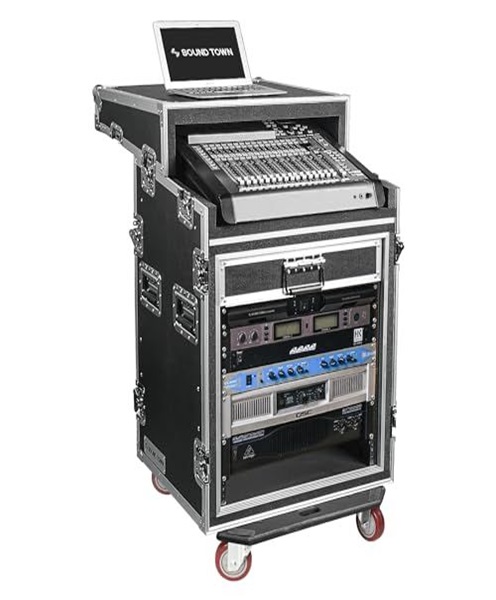
An amplifier rack provides a structured housing solution for professional audio amplifiers and compatible rack-mounted equipment. Rather than placing individual amplifiers loosely around a venue, technicians can install them inside a rack designed to hold equipment securely and provide convenient access to connections and controls.
For event organisers and sound production companies, an amplifier rack is an important part of an organised audio setup. It can help keep equipment together, simplify cable management and make it easier for technicians to monitor the amplification system throughout an event.
At Janeson Rentals, clients can enquire about amplifier rack hire and rental in Kenya for temporary sound reinforcement projects. Whether you are planning a music concert, outdoor festival, church event, corporate conference or private function, hiring an appropriate amplifier rack can support a more organised technical setup.
What Is an Amplifier Rack?
An amplifier rack is a protective and organisational enclosure designed to accommodate professional audio amplifiers and other compatible rack-mounted equipment.
Many professional amplifiers are manufactured in standard rack-mount formats. This allows technicians to install several units inside one enclosure using rack mounting hardware. The equipment is arranged vertically, making it easier to manage multiple devices within a defined space.
Amplifier racks may accommodate:
-
Power amplifiers.
-
Two-channel power amplifiers.
-
Four-channel power amplifiers.
-
Subwoofer amplifiers.
-
Speaker amplifiers.
-
Digital signal processors.
-
Speaker management processors.
-
Audio equalizers.
-
Power distribution units.
-
Other compatible rack-mounted audio equipment.
The actual equipment capacity depends on the rack’s height, depth, weight capacity and internal configuration.
An amplifier rack is not simply a storage box. It is part of the physical infrastructure used to organise professional sound equipment. Its design should allow suitable access to controls and connections while supporting appropriate ventilation and equipment protection.
Why Amplifier Racks Are Important in Professional Sound Systems
Large audio productions may require several amplifiers to power different groups of speakers. For example, a concert sound system may have separate amplification for the main PA speakers, subwoofers, front fills and delay speakers.
Without a suitable equipment arrangement, managing these devices can become difficult. Loose equipment may take up unnecessary floor space, cables may become tangled, and technicians may struggle to identify individual signal and speaker connections.
An amplifier rack helps address these challenges by bringing compatible equipment together in one organised structure.
Some important benefits include:
-
Equipment organisation: Keeps amplifiers and compatible rack-mounted devices arranged in a defined location.
-
Physical protection: Helps protect equipment during handling and transport when an appropriate rack design is used.
-
Cable management: Makes it easier to route and identify connections.
-
Operational convenience: Allows technicians to access amplifier controls and connections.
-
Space management: Reduces the need to position individual amplifiers separately.
-
Transport organisation: Helps production teams move multiple pieces of equipment as one organised assembly when the rack is designed for transport.
-
Professional presentation: Creates a cleaner and more structured technical area.
The rack must still be selected according to the dimensions, weight and ventilation requirements of the equipment being installed.
Amplifier Rack Hire for Concerts and Live Music Events
Concerts require a coordinated sound reinforcement system that can handle vocals, instruments, playback and other audio sources. Depending on the production, several amplifiers may be needed to power the main speakers, subwoofers and other loudspeaker sections.
An amplifier rack provides a central arrangement for compatible amplification equipment. Sound engineers can organise the amplifier channels according to the system design and manage the connections from one location.
Amplifier rack rental may be useful for:
-
Live music concerts.
-
Gospel music performances.
-
Outdoor entertainment events.
-
Music festivals.
-
Touring productions.
-
University concerts.
-
School entertainment programmes.
-
Cultural performances.
-
Live band shows.
-
DJ events.
For a large concert, the sound team may use more than one amplifier rack depending on the number of amplifiers and the physical layout of the production.
The racks should be positioned in suitable locations where technicians can access them safely without obstructing performers, crew members or audience movement.
Amplifier Rack Rental for Churches and Worship Events
Churches that use professional PA systems may have several amplifiers and audio processors to support their sound requirements. These may be used for worship music, preaching, choir performances, conferences and special church programmes.
An amplifier rack can help keep this equipment organised, especially when the sound system includes multiple amplification channels.
Church applications include:
-
Regular worship services.
-
Gospel concerts.
-
Worship nights.
-
Church anniversaries.
-
Christian conferences.
-
Religious conventions.
-
Outdoor crusades.
-
Youth gatherings.
-
Special ministry events.
For churches using passive PA speakers, amplifiers may be installed in a dedicated equipment area. A rack helps organise the equipment and can make routine technical checks easier.
When hiring an amplifier rack for a church event, it is useful to establish the number and dimensions of the amplifiers, the required rack height and whether the equipment needs to be transported between venues.
Amplifier Racks for Corporate Events and Conferences
Corporate events often involve sound equipment that must be installed and operated efficiently within a limited setup period. Conferences, product launches, award ceremonies and business presentations may use professional PA systems with amplifiers and audio processing equipment.
An amplifier rack can help production teams organise the amplification section of the sound system.
It may be useful for:
-
Corporate conferences.
-
Annual general meetings.
-
Product launches.
-
Award ceremonies.
-
Graduation events.
-
Government functions.
-
Business summits.
-
Exhibition presentations.
-
Hotel conferences.
-
Large institutional gatherings.
A neatly organised rack can help technicians identify equipment and manage the system during rehearsals and live presentations.
For events with several technical departments, equipment racks also help maintain a more structured backstage and control-area arrangement.
Amplifier Rack Hire for Outdoor Events
Outdoor productions often require larger sound systems and additional equipment management. Amplifiers may be installed in dedicated technical areas near the stage or at other suitable locations within the production layout.
An amplifier rack helps keep the equipment organised and can support easier handling when the production moves between venues.
Outdoor events where amplifier rack hire may be useful include:
-
Outdoor concerts.
-
County events.
-
Community festivals.
-
Public celebrations.
-
Church crusades.
-
Sports entertainment events.
-
Open-air conferences.
-
Cultural festivals.
-
Outdoor award ceremonies.
Outdoor conditions require additional care. Amplifier racks should be positioned in suitable protected areas, away from rain, moisture and unsafe exposure. Ventilation must not be blocked, and technicians should ensure that cables are routed safely.
Features to Consider When Hiring an Amplifier Rack
Not every amplifier rack is suitable for every sound system. The correct choice depends on the equipment being installed and how the rack will be used.
1. Rack Height
Rack height is commonly measured in rack units, abbreviated as U. One rack unit is 1.75 inches, or approximately 44.45 millimetres.
The total rack height determines how much vertical equipment space is available.
For example, a rack intended to hold two amplifiers and a processor must have sufficient rack units for all the devices, including any necessary spacing or ventilation accessories.
Before hiring, calculate the total rack space required by the equipment.
2. Rack Depth
Amplifiers vary in depth. Some professional power amplifiers are relatively deep, so the rack must have enough internal clearance to accommodate the equipment and its connections.
Check the dimensions of the amplifiers, including rear connectors and any required cable clearance.
3. Weight Capacity
Professional amplifiers can be heavy, particularly large power amplifiers. The rack must be designed to support the combined weight of all installed equipment.
Weight capacity is especially important when the rack will be moved between venues or transported over uneven surfaces.
4. Ventilation
Amplifiers produce heat during operation. A rack must allow sufficient airflow to help prevent overheating.
Depending on the equipment, technicians may need ventilation gaps, suitable rack panels or dedicated cooling arrangements.
Equipment should not be packed tightly in a way that blocks cooling vents.
5. Front and Rear Access
Some racks provide access to equipment from the front and rear. This can be helpful when technicians need to adjust controls, connect signal cables or manage speaker outputs.
The required access depends on the rack design and how the equipment will be operated.
6. Rack Rails and Mounting Hardware
Rack-mounted amplifiers require compatible mounting rails and suitable hardware.
The equipment should be secured correctly to prevent movement during operation or transport.
7. Portability
For event production, portability is an important consideration. A rack with appropriate handles, wheels or transport features may make movement easier, depending on its design.
The rack should be moved using safe handling procedures, especially when loaded with heavy amplifiers.
Types of Amplifier Racks Used in Event Production
Amplifier racks are available in different designs, depending on the installation and transport requirements.
Open-Frame Equipment Racks
Open-frame racks provide accessible mounting space for compatible equipment. They may be suitable for installations where equipment is kept in a controlled technical area.
They generally provide convenient access to the front, rear and sides, depending on the design.
Enclosed Amplifier Racks
Enclosed racks provide a more contained housing arrangement. They may include front and rear doors or removable panels.
These racks can be useful where additional physical protection and a structured equipment enclosure are required.
Portable Amplifier Racks
Portable amplifier racks are designed for equipment that needs to move between event locations.
Depending on their construction, they may include transport handles, wheels and protective panels. They can be useful for mobile sound companies and temporary event productions.
Rack Cases for Amplifiers
Some amplifier racks are built as road or flight cases. These are designed to help protect equipment during transportation and handling.
The choice between a standard rack and a transport-oriented rack depends on how frequently the equipment moves and the level of protection required.
Equipment That Can Be Installed in an Amplifier Rack
An amplifier rack can accommodate different components of a professional audio system, provided they are rack-compatible and the rack has sufficient space.
Common equipment includes:
-
Power amplifiers: Provide power to passive PA speakers.
-
Line array amplifiers: Drive compatible passive line array loudspeakers.
-
Subwoofer amplifiers: Power passive subwoofer systems.
-
Two-channel amplifiers: Provide two amplifier channels for suitable speaker configurations.
-
Four-channel amplifiers: Support multiple speaker channels within a compatible system design.
-
Digital signal processors: Manage audio processing functions.
-
Speaker management processors: Provide loudspeaker routing and system control.
-
Audio equalizers: Adjust frequency response.
-
Power distribution units: Help organise suitable power connections.
-
Rack ventilation accessories: Support airflow where required.
The rack must be loaded in accordance with its weight limits and the manufacturers’ instructions for each installed device.
Amplifier Rack Setup and Cable Management
A well-organised amplifier rack makes it easier for sound technicians to identify equipment and trace connections.
A typical installation may involve:
-
Measuring the available rack space.
-
Confirming that the rack can support the equipment’s combined weight.
-
Positioning equipment according to the system layout and ventilation requirements.
-
Securing amplifiers and processors with appropriate mounting hardware.
-
Organising power cables separately from audio signal connections where practical.
-
Labelling signal inputs, amplifier outputs and speaker connections.
-
Checking that ventilation openings remain clear.
-
Testing equipment operation before the event begins.
Cable management is particularly important in larger productions. Clear labelling helps technicians identify connections quickly and reduces confusion when troubleshooting.
Speaker cables should be correctly identified and kept separate from line-level audio connections. Power cables should also be routed safely to reduce trip hazards and accidental disconnections.
Why Renting an Amplifier Rack Can Be Practical
Purchasing an amplifier rack may not be necessary for every event organiser. Some organisations only require additional rack space for occasional concerts, conferences or outdoor productions.
Amplifier rack hire offers flexibility without requiring a permanent purchase.
Potential benefits include:
-
Access to suitable rack equipment for temporary events.
-
Avoiding purchase costs for occasional use.
-
Flexibility for different sound system configurations.
-
Easier equipment organisation during productions.
-
Reduced storage requirements between events.
-
Support for temporary sound reinforcement installations.
For production companies managing several events, hiring additional racks can also be useful when existing equipment is already allocated to other projects.
Why Choose Janeson Rentals for Amplifier Rack Hire in Kenya?
A professional audio setup requires equipment that can be organised, installed and operated safely. Selecting a suitable amplifier rack helps ensure that the amplification section of the sound system has a structured equipment arrangement.
Janeson Rentals provides a point of enquiry for amplifier rack hire and rental in Kenya for event organisers, sound technicians and production teams.
Amplifier rack rental may be useful for:
-
Concerts and live performances.
-
Corporate conferences.
-
Church services and worship events.
-
Outdoor festivals.
-
Graduation ceremonies.
-
Award ceremonies.
-
DJ productions.
-
School and university events.
-
Public celebrations.
-
Temporary PA installations.
Janeson Rentals is based in Nairobi and serves clients seeking event equipment hire across Kenya.
When making an enquiry, provide the number of amplifiers, their approximate dimensions, the total rack space required and the event location. This helps establish whether the rack arrangement will suit the equipment and production requirements.
How to Prepare for Amplifier Rack Rental
Before hiring an amplifier rack, consider the following practical steps:
-
List the equipment: Identify every amplifier, processor and other device that needs to be installed.
-
Check rack dimensions: Confirm the rack-unit height and equipment depth requirements.
-
Calculate the total weight: Ensure that the rack can safely support the equipment.
-
Consider ventilation: Identify any cooling requirements for the amplifiers.
-
Plan cable access: Establish whether front and rear access is necessary.
-
Confirm transportation needs: Consider how the rack will be moved to and from the venue.
-
Discuss installation: Establish who will mount and connect the equipment.
-
Share the event details: Provide the rental dates, venue and expected usage period.
These preparations can help reduce setup delays and make the equipment arrangement more efficient.
Book Amplifier Rack Hire & Rental in Kenya
An amplifier rack is a useful part of professional sound production, helping technicians organise power amplifiers and compatible audio equipment in one structured arrangement. From live music concerts to corporate conferences and church events, a suitable rack can make equipment handling and system management more convenient.
Janeson Rentals provides a point of enquiry for amplifier rack hire and rental in Kenya. Contact the company with your equipment requirements, event location and rental dates to discuss an appropriate rack solution for your next production.