Audio Delay Processor Hire & Rental in Kenya
Sound quality is not determined by speaker power and audio clarity alone. Timing is also an important part of professional sound reinforcement, particularly in large venues where several loudspeakers are positioned at different distances from the audience. When sound reaches listeners at different times from multiple speakers, it may create echoes, uneven sound coverage or unclear audio. An Audio Delay Processor helps sound engineers control the timing of audio signals so that different components of a sound system can work together more effectively.
At Janeson Rentals, we provide Audio Delay Processor hire and rental solutions in Kenya for event organisers, production companies, sound engineers, churches, DJs and corporate clients. Whether you are organising a concert, conference, outdoor event, worship service or large entertainment production, audio delay processing can help address timing requirements within your sound system.
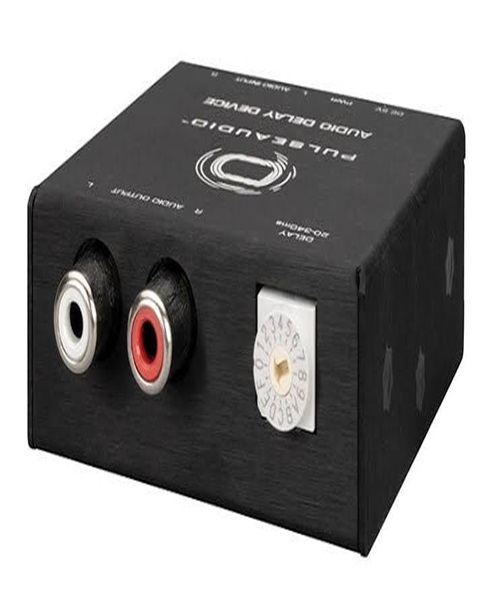
An Audio Delay Processor is a device designed to introduce a controlled time delay into an audio signal. It allows sound engineers to adjust when an audio signal reaches a particular speaker or processing channel.
For example, in a large outdoor concert, the main PA speakers may be positioned close to the stage while additional speakers are placed further into the audience area. Since sound travels through the air at a finite speed, the audio from the additional speakers may need to be delayed so that it arrives in coordination with the sound from the main system.
An audio delay processor provides a way to make these timing adjustments.
Through Janeson Rentals, clients can enquire about audio delay processor hire in Nairobi and across Kenya for different sound production requirements.
What Is an Audio Delay Processor?
An Audio Delay Processor is an electronic audio device that delays an incoming signal by a selected amount of time before sending it to an output.
The delay is generally measured in milliseconds. By adjusting the delay time, sound engineers can control the timing relationship between different audio signals.
In professional sound systems, delay processing is often used to coordinate loudspeakers positioned at different distances from the audience.
Consider a large conference hall with speakers positioned near the stage and additional speakers near the back of the room. Sound from the main speakers may reach the rear audience later than it reaches people seated near the stage. If the rear speakers reproduce the signal without appropriate timing coordination, listeners may hear competing sound arrivals.
A delay processor can be used to adjust the timing of the additional speakers so that their output is better coordinated with the main system.
Audio delay processors can also be used in music production, recording, broadcasting and creative sound design. However, their application in live event production is particularly important for distributed loudspeaker systems.
Why Audio Delay Processors Are Important in Professional Sound Systems
Audio delay processing helps sound engineers manage timing differences between different loudspeakers and audio signals.
One important benefit is speaker alignment. When speakers are positioned at different distances, their sound may arrive at the audience at different times. Controlled delay can help coordinate these arrivals.
Another benefit is improved sound coverage. Large venues often require several speaker groups to reach different audience sections. Delay processing helps manage the timing relationship between the main system and additional speakers.
Audio delay can also support loudspeaker integration. For example, some sound system configurations require timing adjustments between subwoofers and top speakers. A suitable delay setting can help improve the relationship between their outputs around the crossover region.
In recording and production environments, delay processors can also be used creatively to produce echoes, rhythmic effects and other time-based audio treatments.
The correct delay settings depend on the physical speaker arrangement, venue dimensions and system design. A delay processor does not automatically correct every acoustic problem, but it gives sound engineers an important tool for managing timing.
Audio Delay Processor Hire for Concerts and Live Music Events
Concerts and live performances often take place in large venues where a single group of speakers may not provide adequate coverage for every audience member.
To reach a wider audience, production teams may use main PA speakers, delay speakers, front fills, side fills and other loudspeaker groups.
An audio delay processor helps manage the timing of these additional speaker systems.
For example, at an outdoor music festival, the main PA system may be positioned near the stage, with additional speakers placed further down the audience area. The sound engineer can calculate the required delay based on speaker distances and configure the processor accordingly.
Audio delay processor rental may be useful for:
-
Live music concerts.
-
Outdoor music festivals.
-
Gospel music performances.
-
Large church gatherings.
-
Cultural festivals.
-
University concerts.
-
Corporate entertainment shows.
-
Public celebrations.
-
Theatre productions.
-
Large stage performances.
Correct delay alignment helps prevent poorly coordinated sound arrivals and supports a more consistent listening experience across the audience area.
Audio Delay Processor Rental for Corporate Events and Conferences
Large corporate conferences and exhibitions may use several speaker zones to distribute sound across a venue.
A conference hall may have main speakers near the stage, additional speakers near the back of the seating area and separate speakers in adjoining spaces. These systems need careful timing coordination to avoid unwanted echoes and confusing sound arrivals.
An audio delay processor can help manage the timing of these speaker groups.
For example, during a product launch, a presenter may speak from a stage while the audience is spread across a large hall. Additional speakers positioned further into the room can be configured with appropriate delay settings to support coordinated sound distribution.
Audio delay processor hire can support:
-
Corporate conferences.
-
Business seminars.
-
Product launches.
-
Annual general meetings.
-
Awards ceremonies.
-
Government functions.
-
Exhibition events.
-
Training workshops.
-
Large business meetings.
-
Outdoor corporate productions.
The sound engineer should consider the venue dimensions, speaker positions and audience layout when determining the required delay settings.
Audio Delay Processor Hire for Churches and Worship Centres
Churches and worship centres may have complex layouts that require several loudspeaker groups.
For example, a large worship hall may have main speakers near the altar or stage, additional speakers along the sides and rear of the congregation, and separate speakers in balconies or adjoining rooms.
When these speakers operate together, their timing relationships need to be managed carefully.
An audio delay processor can help coordinate the output of additional speaker groups with the main system. This is particularly useful when a church has a large congregation spread across different seating areas.
Audio delay processor rental may be useful for:
-
Sunday worship services.
-
Church conventions.
-
Gospel music concerts.
-
Worship nights.
-
Prayer meetings.
-
Choir performances.
-
Church anniversaries.
-
Religious conferences.
-
Outdoor ministry events.
-
Large worship gatherings.
A properly configured system can help improve sound consistency across the worship space while reducing unwanted timing differences.
Audio Delay Processor for Outdoor Events
Outdoor events often present unique sound distribution challenges. Unlike enclosed venues, outdoor spaces may not provide walls and ceilings that help contain or reflect sound in predictable ways.
Large outdoor productions may require several loudspeaker groups positioned at different distances from the stage.
For example, a public celebration or outdoor festival may have a main stage at one end of the venue and additional speaker systems positioned further away to cover a large audience.
An audio delay processor can help coordinate the timing of these additional systems.
Outdoor applications include:
-
Public concerts.
-
County celebrations.
-
Sports entertainment events.
-
Community festivals.
-
Political and public gatherings.
-
Outdoor church services.
-
Cultural celebrations.
-
Large corporate events.
The processor should be configured based on measured distances and the actual system arrangement. Wind, temperature and other environmental conditions can also influence sound propagation, so final system tuning should be carried out at the venue.
Understanding How Audio Delay Processing Works
An audio delay processor receives an incoming audio signal, stores it briefly in a digital processing system and sends it to the output after a selected time interval.
The delay time determines how long the signal is held before being reproduced.
In professional sound systems, delay is commonly measured in milliseconds. Even relatively small timing differences can affect how sound from different speakers combines at an audience position.
Several controls and concepts are important when using an audio delay processor.
Delay Time: This determines the amount of time by which the audio signal is delayed. It may be adjusted in milliseconds, depending on the processor.
Input and Output Routing: These controls determine which audio signals are processed and where the delayed signals are sent.
Independent Output Delay: Some processors allow different delay settings for individual outputs. This is particularly useful when several speaker groups are positioned at different distances.
Polarity: Some processors provide polarity controls that allow engineers to change the polarity of an output where required for system alignment.
Fine Adjustment: Certain units allow precise timing adjustments for accurate alignment.
Preset Storage: Some processors allow delay configurations to be saved and recalled for repeatable setups.
The appropriate settings should be based on the actual speaker positions and the system’s technical requirements rather than guesswork.
Types of Audio Delay Processors
Audio delay processing is available in different formats depending on the intended application.
Digital Audio Delay Processor
Digital delay processors use digital technology to introduce precise time delays into audio signals. They may provide multiple inputs and outputs, allowing sound engineers to configure several speaker groups independently.
Multi-Channel Delay Processor
A multi-channel delay processor provides several independently adjustable outputs. It is useful for complex sound systems involving main speakers, front fills, delay towers and other loudspeaker groups.
Speaker Management Processor with Delay
Many speaker management processors include built-in delay functions. These devices combine timing adjustments with other loudspeaker management tools such as crossover processing, equalisation and limiting.
Rack-Mounted Audio Delay Processor
Rack-mounted units are commonly used in professional sound production. They can be installed alongside amplifiers, crossovers and other audio processing equipment for organised system management.
Software-Controlled Delay Systems
Some modern digital processors allow technicians to configure delay settings through computer software or remote control interfaces. This can make system adjustment easier during installation and live event preparation.
Audio Delay Processor and Other Sound Equipment
Audio delay processors work with other sound equipment to create a coordinated professional sound system.
Mixing Consoles: The mixing console combines the different audio sources and sends the mixed signal to the processing system.
Speaker Management Processors: Speaker management processors may include built-in delay functions alongside crossover, equalisation and limiting.
Audio Crossovers: Crossovers divide frequencies between different loudspeaker components. Delay processing can help coordinate the timing of these components.
Subwoofers: Delay may be used to adjust the timing relationship between subwoofers and main speakers, depending on the system design.
Full-Range Speakers: Additional full-range speakers positioned further from the stage may require delay to coordinate their output with the main PA system.
Power Amplifiers: In many professional configurations, processed signals are sent from the delay processor to the relevant amplifier channels.
Digital Signal Processors: A DSP may combine delay processing with several other audio management functions, reducing the need for separate processors in some setups.
Choosing the Right Audio Delay Processor for Your Event
Choosing an appropriate delay processor requires an understanding of the sound system and the venue.
First, determine the number of speaker groups that require independent delay adjustment. A simple arrangement may require only one delayed output, while a large event may require several independently configured outputs.
Consider the available inputs and outputs. The processor should support the number of signal paths needed for the system.
The delay adjustment range and precision are also important. Large venues and complex speaker arrangements may require more extensive timing adjustments.
Other factors include:
-
Number of input and output channels.
-
Independent output delay capability.
-
Available delay adjustment range.
-
Precision of timing controls.
-
Signal connection compatibility.
-
Preset storage and recall.
-
Remote configuration options.
-
Integration with the speaker management system.
-
Number and position of loudspeakers.
-
Availability of a qualified sound technician.
When requesting an audio delay processor rental, provide information about the venue layout and speaker positions. This helps determine the appropriate equipment and processing requirements.
Why Choose Janeson Rentals for Audio Delay Processor Hire in Kenya?
Janeson Rentals provides event equipment hire and rental solutions for clients organising professional sound productions across Kenya.
We support enquiries from event planners, sound engineers, production companies, DJs, churches and corporate organisations looking for equipment for different event applications.
Reasons to choose Janeson Rentals include:
Professional audio equipment solutions: We support different event categories, including concerts, conferences, church events, weddings, corporate functions and outdoor productions.
Kenya-focused rental services: Based in Nairobi, Janeson Rentals serves clients looking for event equipment hire in Nairobi and across Kenya.
Complementary sound equipment: You can enquire about speaker management processors, digital signal processors, audio crossovers, PA systems, amplifiers, subwoofers, full-range speakers and mixing consoles.
Flexible equipment rental: Hiring allows event organisers and production teams to access specialist equipment for specific projects without purchasing every component.
Convenient equipment sourcing: Enquiring about complementary audio equipment through one provider can make event preparation and technical coordination easier.
Our goal is to help clients identify suitable equipment for their sound production requirements.
Book an Audio Delay Processor for Hire and Rental in Kenya
Are you planning a concert, conference, church event, outdoor festival or large corporate production that requires professional speaker timing and alignment?
Janeson Rentals can help you enquire about Audio Delay Processor hire and rental in Kenya.
When making your enquiry, provide your event date, venue, location and details of your sound system. Include the number of speaker groups, their positions and the type of processing equipment already available, where possible.
This information helps establish the appropriate delay processing requirements for your production.
Contact Janeson Rentals today to enquire about audio delay processor availability and complementary professional sound equipment for your next event.