Audio Isolator Hire & Rental in Kenya
Clear sound is essential for successful event production. Whether you are organising a live concert, corporate conference, wedding reception, church service, DJ performance or outdoor festival, unwanted audio noise can affect the listening experience.
One common problem in professional sound systems is electrical interference, particularly ground-loop hum. This can occur when connected audio devices have different electrical ground potentials and create unwanted current paths through their connections.
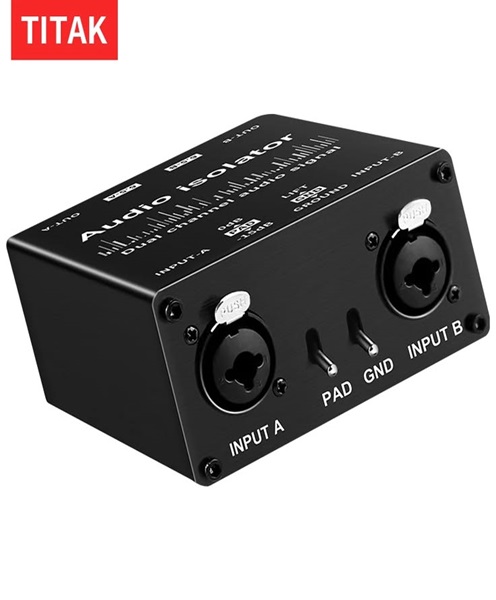
An Audio Isolator is a useful device for addressing certain noise and grounding problems in audio systems. It separates the electrical connection between two audio circuits while allowing the audio signal to pass through.
Janeson Rentals offers Audio Isolator hire and rental in Kenya for event organisers, sound engineers, DJs, production companies, churches and businesses requiring professional audio equipment.
Audio isolators are useful in sound setups involving mixing consoles, laptops, playback devices, amplifiers, powered speakers and other electronic equipment. They can help reduce unwanted hum, buzzing and other interference associated with ground loops.
The exact application depends on the type of isolator, the signal connections and the nature of the problem.
For event productions in Nairobi and across Kenya, hiring an audio isolator can be a practical way to obtain the equipment required for a particular sound system configuration without purchasing additional equipment permanently.
What Is an Audio Isolator?
An Audio Isolator is a device designed to electrically separate two audio circuits while allowing an audio signal to pass between them.
Many audio isolators use transformers to transfer audio signals magnetically rather than through a direct electrical connection between the input and output circuits.
This separation can help interrupt certain unwanted ground-current paths that cause audible hum in sound systems.
An audio isolator may be used with different types of audio connections, depending on its design.
Common applications include:
-
Stereo audio isolation.
-
Line-level audio isolation.
-
Unbalanced audio connections.
-
Balanced audio signal isolation.
-
Playback equipment connections.
-
DJ audio systems.
-
Professional sound reinforcement.
-
Recording and production systems.
It is important to choose an isolator that matches the signal type and connector requirements of the equipment being connected.
A line-level stereo isolator, for example, is not automatically suitable for every microphone-level or speaker-level application.
Why Is an Audio Isolator Important in Event Sound Production?
Event sound systems often involve several electronic devices connected together. A DJ may connect a laptop to a mixer, the mixer may connect to amplifiers or powered speakers, and additional equipment may be connected to the same electrical supply.
Differences in electrical grounding can sometimes create unwanted noise.
An Audio Isolator can help address certain ground-loop problems by separating the audio circuits.
1. Helps Reduce Ground-Loop Hum
Ground-loop hum is one of the most common noise problems encountered in audio installations.
It may sound like a continuous low-frequency hum, often around the mains frequency or its harmonics. It can occur when connected equipment creates multiple grounding paths.
A suitable audio isolator can interrupt the electrical path responsible for some ground loops.
2. Provides Electrical Isolation
Transformer-based audio isolators transfer the audio signal without requiring a direct conductive connection between the two sides.
This can help reduce the effect of certain electrical differences between connected devices.
3. Improves Audio System Troubleshooting
An audio isolator can be useful when sound engineers are diagnosing unwanted hum or buzzing in an audio system.
By isolating a connection, the engineer can determine whether a noise problem is associated with a particular signal path or grounding arrangement.
4. Supports Cleaner Playback Connections
Laptops, media players, DJ equipment and other electronic devices may introduce noise when connected to professional sound systems.
A suitable isolator can help address certain unwanted noises when the problem is related to grounding or electrical interference.
5. Provides Flexible Equipment Integration
Audio isolators can be used in different sound configurations, depending on their input and output connections.
They may be useful in temporary event setups where equipment from different sources must be connected.
Audio Isolator Hire for Concerts and Live Music Events
Live concerts require a reliable audio system that delivers clear sound to the audience. The system may include microphones, instruments, mixing consoles, processors, amplifiers and speakers.
When multiple electronic devices are connected, unwanted electrical noise can sometimes enter the signal chain.
An audio isolator may help resolve certain grounding-related problems.
It can be useful in productions involving:
-
Live band concerts.
-
Gospel music events.
-
Jazz performances.
-
Outdoor music festivals.
-
Acoustic music showcases.
-
Cultural entertainment.
-
School concerts.
-
University events.
-
Touring performances.
-
Corporate entertainment.
For example, a live band may use a playback laptop connected to a mixing console. If the connection introduces ground-loop hum, a suitable line-level isolator may help interrupt the unwanted electrical path.
The sound engineer should first identify the source of the noise before selecting an isolator.
Audio Isolator Rental for DJs and Music Playback Systems
DJ setups often involve several connected devices, including laptops, controllers, mixers, media players and powered speakers.
Some of these devices may be powered from different electrical outlets, creating conditions where ground-loop noise can occur.
An Audio Isolator can be useful when a compatible audio connection produces unwanted hum or buzzing.
DJ applications include:
-
Wedding DJ setups.
-
Corporate parties.
-
Private entertainment events.
-
Club-style events.
-
Product launches.
-
Fashion shows.
-
Outdoor parties.
-
University entertainment.
-
Music festivals.
-
Brand activation events.
A line-level audio isolator may be placed between a playback source and a mixer or between compatible audio devices, depending on the setup.
For stereo playback equipment, a two-channel isolator may be required to handle left and right audio signals.
The sound engineer should check connector types, signal levels and stereo requirements before selecting the unit.
Audio Isolator Hire for Corporate Events and Conferences
Corporate events frequently use laptops, presentation systems, media players, mixing consoles and powered speakers.
Presentations may include videos, background music, remote audio feeds and other playback material. Connecting these devices to the sound system can sometimes introduce electrical noise.
An Audio Isolator may help address ground-loop problems affecting compatible audio connections.
Corporate applications include:
-
Business conferences.
-
Corporate meetings.
-
Product launches.
-
Awards ceremonies.
-
Company anniversaries.
-
Gala dinners.
-
Training workshops.
-
Seminars.
-
Trade exhibitions.
-
Corporate entertainment.
For example, a laptop used to play a presentation video may be connected to the event mixing console. If the audio connection produces hum, the sound engineer may use an appropriate isolator to separate the circuits.
This can help improve the quality of playback during the presentation.
However, an isolator should not be used as a substitute for proper electrical safety practices or a correctly installed power system.
Audio Isolator Rental for Churches and Worship Services
Churches use a wide range of audio equipment, including mixing consoles, microphones, keyboards, amplifiers, powered speakers and playback systems.
Some churches also connect computers and media players to their sound systems for presentations, recorded messages, music and video content.
These connections can sometimes introduce unwanted noise.
An audio isolator can help address certain grounding-related problems where the signal connection is compatible.
Churches may require Audio Isolator hire for:
-
Sunday worship services.
-
Gospel concerts.
-
Church conferences.
-
Revival meetings.
-
Worship nights.
-
Christian music events.
-
Choir performances.
-
Church anniversaries.
-
Youth programmes.
-
Special celebrations.
The equipment may be particularly useful where multiple electronic devices are connected to the same mixing console.
A sound engineer should inspect the complete signal chain to determine whether an audio isolator is an appropriate solution.
Audio Isolator Hire for Weddings and Private Events
Wedding productions involve different entertainment activities, including speeches, live bands, DJs and recorded music.
The sound system may include wireless microphones, mixing consoles, laptops, media players, powered speakers and amplifiers.
When devices are connected together, unwanted noise may sometimes appear in the audio signal.
An audio isolator can help resolve certain ground-loop problems affecting compatible playback connections.
It may be useful for:
-
Wedding receptions.
-
Engagement celebrations.
-
Birthday parties.
-
Anniversary events.
-
Private concerts.
-
Graduation parties.
-
Family celebrations.
-
Traditional wedding entertainment.
For example, a DJ may connect a laptop to an audio mixer and notice unwanted hum through the speakers. If the problem is caused by a ground loop in the audio connection, a suitable isolator may help reduce it.
Testing the equipment before guests arrive helps the sound team identify and resolve potential issues.
Types of Audio Isolators Used in Sound Systems
Audio isolators come in different configurations depending on the signal type and intended application.
Stereo Audio Isolator
A stereo audio isolator is designed to handle two audio channels, normally left and right.
It is commonly used with laptops, media players, DJ equipment and other stereo playback sources.
By isolating both channels, it can help address ground-loop problems affecting a stereo connection.
Line-Level Audio Isolator
A line-level audio isolator is designed for audio signals operating at line level.
It may be used between playback devices, mixers, audio processors and other compatible equipment.
The input and output connectors vary by model.
Balanced Audio Isolator
A balanced audio isolator is designed to work with balanced audio connections.
It can be useful in professional sound systems where balanced signals need to be transferred while maintaining electrical isolation.
The specific design determines the supported signal levels and connections.
Transformer Audio Isolator
Transformer-based isolators use magnetic coupling to transfer the audio signal between electrically separated circuits.
They are commonly used for ground-loop isolation and signal interfacing.
Their performance depends on the transformer’s design, frequency response and signal-handling capability.
Important Features to Consider When Hiring an Audio Isolator
Selecting an appropriate Audio Isolator requires an understanding of the signal path and the problem being addressed.
Consider the following factors before arranging a rental:
1. Signal type: Determine whether the isolator is required for microphone-level, instrument-level or line-level audio.
2. Number of channels: A mono source may require a single-channel unit, while stereo playback requires two channels.
3. Input connectors: Confirm whether the source uses RCA, 6.35 mm jack, XLR or another connection type.
4. Output connectors: Check that the isolator can connect to the receiving equipment.
5. Frequency response: The isolator should support the frequency range required for the intended audio application.
6. Signal-handling capacity: Confirm that the unit can accommodate the expected input level without unwanted distortion.
7. Transformer quality: Transformer design influences isolation performance and audio characteristics.
8. Ground-loop compatibility: Establish whether the noise problem is actually related to a grounding path that the isolator can interrupt.
9. Stereo requirements: Make sure both left and right channels can be isolated where necessary.
10. Equipment compatibility: Confirm that the isolator is appropriate for the source and destination devices.
Audio Isolator vs DI Box: Understanding the Difference
Audio isolators and DI Boxes may both use transformers, but they are designed for different purposes.
A DI Box is primarily used to connect compatible instrument or audio sources to professional mixing console inputs. It commonly converts unbalanced signals into balanced microphone-level outputs and may also provide impedance conversion.
An Audio Isolator is primarily used to provide electrical separation between audio circuits. Its main purpose is often to address ground-loop noise or unwanted electrical interference.
Some DI Boxes provide transformer isolation as part of their design, but this does not make every DI Box interchangeable with every audio isolator.
For example:
-
A Passive DI Box may be appropriate for connecting a compatible keyboard output to a mixing console.
-
An Active DI Box may be suitable for a passive guitar requiring a high-impedance input.
-
A stereo audio isolator may be suitable for addressing ground-loop hum in a laptop-to-mixer playback connection.
-
A balanced line isolator may be required for a particular professional audio signal path.
Choosing the correct equipment helps avoid unnecessary connections and poor audio performance.
Audio Isolator and Other Professional Audio Equipment
An audio isolator is usually incorporated into a larger sound system. Depending on the event, it may be used alongside:
-
Digital mixing consoles.
-
Analogue mixing consoles.
-
Professional PA systems.
-
Powered speakers.
-
Passive speakers.
-
Audio amplifiers.
-
DJ controllers.
-
DJ mixers.
-
Media players.
-
Laptops.
-
Audio effects processors.
-
DI Boxes.
-
Audio signal processors.
-
XLR cables.
-
RCA cables.
-
6.35 mm audio cables.
For example, a laptop may be connected to a stereo audio isolator before feeding a mixing console. The console then sends the audio to the main PA system.
The isolator should be placed at the appropriate point in the signal chain based on the noise source and equipment connections.
Common Audio Noise Problems and When an Isolator May Help
Understanding the type of noise affecting a sound system is important before hiring an isolator.
Ground-loop hum: This is a continuous low-frequency hum caused by unwanted current paths between connected equipment. A suitable isolator may help interrupt the audio ground loop.
Electrical buzzing: This may be associated with grounding issues, electromagnetic interference or power-related problems. An isolator can help in some cases, but the actual cause should be identified.
Intermittent interference: This may result from poor connections, damaged cables, wireless interference or other equipment faults. An audio isolator will not automatically solve these problems.
Distorted sound: Distortion may be caused by excessive signal levels, incorrect gain settings or unsuitable equipment connections. An isolator is not a general-purpose distortion correction device.
A sound engineer should inspect the signal chain, power arrangement and cables before deciding whether an audio isolator is necessary.
Why Choose Janeson Rentals for Audio Isolator Hire?
Janeson Rentals provides event equipment hire and rental solutions for clients organising events in Nairobi and across Kenya.
We understand that professional sound production involves both major audio equipment and smaller accessories that help maintain clean and organised connections.
An Audio Isolator can be an important addition to an event sound setup when unwanted grounding-related noise affects compatible audio connections.
Reasons to consider Janeson Rentals include:
Event equipment hire solutions: Clients can arrange equipment for individual events and productions without purchasing every item permanently.
Support for different event types: Audio isolators may be useful for concerts, weddings, corporate conferences, DJ events, churches and other sound productions.
Related audio equipment: Clients can plan additional requirements, including PA systems, speakers, mixing consoles, microphones, DI Boxes and audio accessories, subject to availability.
Nairobi-based service: Janeson Rentals is based in Nairobi and serves event organisers across Kenya.
Flexible equipment planning: Equipment requirements can be discussed according to the event, audio sources and sound system configuration.
Book an Audio Isolator for Hire in Kenya
If you are organising a concert, corporate conference, wedding, church service or DJ event and need to address unwanted noise in your sound system, an Audio Isolator may be a useful solution.
Janeson Rentals offers Audio Isolator hire and rental solutions in Kenya for sound engineers, event organisers, DJs, churches and production companies.
When making an enquiry, provide the event date, venue, type of audio equipment being connected and a description of the noise problem. If possible, share the input and output connection types so the appropriate isolator can be identified.
Contact Janeson Rentals to enquire about Audio Isolator hire and rental in Kenya and arrange the audio equipment required for your next event.