Digital Audio Mixer Hire & Rental in Kenya
Professional sound production requires more than connecting microphones to speakers. Event technicians must balance different audio sources, manage signal levels, control feedback, create monitor mixes and ensure that every part of the programme can be heard clearly.
A digital audio mixer provides a flexible way to manage these responsibilities. Unlike traditional analog consoles, digital mixers process audio signals using digital technology and may provide advanced features such as built-in effects, dynamic processing, scene recall, flexible routing and remote operation.
At Janeson Rentals, we provide event equipment hire and rental solutions for clients organising conferences, concerts, weddings, church events, corporate functions and live performances across Kenya. Digital audio mixer hire is suitable for productions that require more advanced control over their sound systems.
Digital mixers are used in different professional audio environments, from small performance venues to large concert productions. Their features vary by model, but they generally provide a range of tools for managing audio channels and outputs.
Whether you are planning a live band performance, a church conference, a corporate launch or an outdoor concert, the right digital mixer can help your sound team manage a more organised and controlled audio setup.
What Is a Digital Audio Mixer?
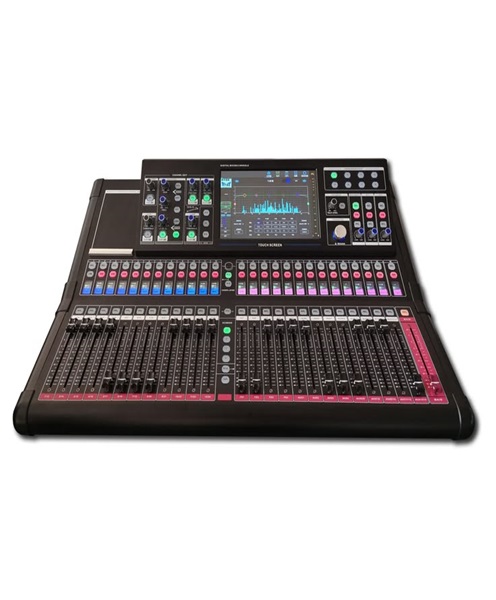
A digital audio mixer is an electronic console that receives audio signals, converts them into digital data where necessary, processes them and combines them into one or more output mixes.
It performs many of the same functions as an analog mixer, including adjusting input levels, controlling equalisation and combining different sound sources. However, digital mixers can offer additional processing and routing capabilities within a single console.
Depending on the model, a digital mixer may include:
-
Multiple microphone and line inputs.
-
Digital channel processing.
-
Parametric equalisation.
-
Compression and gating.
-
Built-in reverb and delay effects.
-
Auxiliary and subgroup routing.
-
Configurable output buses.
-
Scene and setting recall.
-
USB or digital recording features.
-
Network or remote-control functionality.
Not every digital mixer includes all these features. The available functions depend on the specific model and configuration.
How a Digital Audio Mixer Works
Audio sources such as microphones, instruments and playback devices connect to the mixer through compatible inputs. The signals are then converted into digital form when required and processed by the mixer.
The sound operator controls each channel through the console’s interface. This may include physical faders, rotary controls, touchscreens, digital displays and assignable buttons.
The operator can adjust gain, equalisation, dynamics and other processing functions. The individual channels are then routed to the appropriate output buses.
For example, a live concert may require one mix for the main PA speakers and separate mixes for performers using stage monitors. A digital mixer with suitable bus and output capacity can help manage these different requirements.
Some digital consoles also allow operators to save settings as scenes or show files. These settings can be recalled later, which is particularly useful for productions with multiple performers or recurring programmes.
Benefits of Digital Audio Mixer Hire in Kenya
1. Advanced audio processing
Digital mixers may provide built-in equalisation, compression, gating and effects. These tools help sound engineers manage audio without relying on separate external processors for every function.
2. Flexible signal routing
Digital consoles can provide configurable buses and outputs. This allows sound teams to create different mixes for main speakers, monitors, recording and other audio destinations.
3. Scene recall
Many digital mixers allow operators to save and recall console settings. This is useful when several speakers, performers or programme sections require different configurations.
4. Channel management
Digital mixers can accommodate multiple audio sources and provide detailed control over each channel, depending on the model.
5. Built-in effects
Some consoles include reverb, delay and other effects that can be applied to vocals and instruments.
6. Convenient remote operation
Certain digital mixers support remote control through compatible software and network connections. This can allow a sound engineer to adjust the mix from a suitable position in the venue.
7. Efficient event preparation
Saved settings and flexible routing can help sound engineers prepare complex productions more efficiently, particularly when the system is used repeatedly.
Events That Benefit from Digital Audio Mixer Rental
Concerts and music festivals
Concerts often involve multiple performers, microphones, instruments and monitor mixes. A digital mixer can provide the channel processing and routing required for these productions.
Church conferences and worship concerts
Church events may involve vocal groups, worship leaders, musical instruments, guest speakers and playback devices. A digital console can help manage these sources while providing separate mixes for the main PA and stage monitors.
Corporate conferences
Large conferences may involve several presenters, panel discussions, video playback, remote audio feeds and audience microphones. Digital mixers can help sound teams organise these different inputs and outputs.
Weddings and entertainment events
Weddings may combine live music, DJs, speeches and recorded entertainment. A digital mixer can help manage the different sources and maintain appropriate sound levels throughout the programme.
Product launches and brand activations
Brand events often use microphones, music, videos and demonstration audio. Digital mixing can provide control over these sources and help coordinate changes between programme sections.
Theatre and stage productions
Theatre performances may require multiple microphones, playback cues, music and sound effects. Digital consoles with suitable routing and scene functions can support these technical requirements.
Key Features to Consider When Hiring a Digital Audio Mixer
Choosing a digital mixer requires careful attention to the event’s technical setup.
Input capacity: Confirm the number of physical inputs available and whether additional inputs can be supported through compatible digital stage boxes or network connections.
Output capacity: Consider the number of main, auxiliary and monitor outputs required.
Channel processing: Check the available EQ, compression, gating and other processing functions.
Effects: Determine whether built-in effects are sufficient for the production or whether external effects equipment is required.
Scene management: If the event has several programme sections, saved scenes may help the operator recall different settings.
Recording connectivity: Some mixers support multitrack recording or stereo USB recording. Confirm the specific recording capability rather than assuming every USB-equipped mixer offers the same functions.
Remote control: If remote operation is required, check software compatibility, network requirements and supported devices.
Digital connectivity: Some consoles support digital audio networking or stage boxes. Confirm that all related equipment is compatible.
Operator familiarity: Digital consoles vary significantly in their layouts and operating systems. The sound engineer should be familiar with the selected model.
Digital Audio Mixer for Live Concerts
Live concerts are demanding audio environments because the sound team must manage several sources simultaneously while responding to changes during the performance.
A digital mixer can provide detailed channel processing for vocals and instruments. For example, the engineer may use equalisation to improve vocal clarity, compression to control dynamic variation and effects to create the desired sound.
Monitor mixes are also important. Performers need to hear appropriate combinations of vocals, instruments and other sources on stage.
A digital console with sufficient auxiliary buses and physical outputs can help create these separate mixes. The exact configuration depends on the number of performers and the monitoring system.
Digital Audio Mixer for Conferences and Corporate Events
Corporate events require clear speech and controlled playback audio. A conference may include several microphones, laptops, video playback, presentation audio and microphones for audience questions.
A digital mixer can help the operator manage these sources through individual channels. It may also provide automatic or manual processing tools, depending on the model, to help maintain consistent speech levels.
For panel discussions, separate microphone channels make it easier to control each speaker. The sound engineer can mute unused microphones, adjust levels and manage the overall mix.
Digital Audio Mixer Versus Analog Audio Mixer
Both digital and analog mixers combine and control audio signals, but they differ in processing and operation.
Analog mixers generally provide direct physical controls and analog signal paths. Digital mixers process signals digitally and may offer more extensive routing, built-in processing and scene recall.
A small event with a few microphones may work perfectly well with an analog mixer. A larger production with multiple monitor mixes, complex routing and several performers may benefit from a digital console.
The best option depends on the technical requirements, the sound operator’s experience and the available supporting equipment.
Digital Mixer Compatibility With PA Systems
A digital mixer must be compatible with the complete audio system. It may connect to wireless microphones, wired microphones, DI boxes, stage boxes, powered speakers, amplifiers, subwoofers and stage monitors.
The connection arrangement depends on the mixer’s input and output specifications.
For larger productions, digital stage boxes may be used to connect stage inputs to the main console through compatible digital connections. These systems require correct configuration and matching equipment.
It is important to plan the signal flow before the event. This helps prevent connection problems and ensures that each audio source reaches the correct output.
Safe Setup and Operation of Digital Mixers
Digital consoles require careful handling and correct configuration.
-
Position the console on a stable surface.
-
Keep liquids away from the touchscreen, faders and connections.
-
Protect the mixer from dust, rain and excessive heat.
-
Check power supplies and cables before switching on.
-
Confirm input and output routing before the event.
-
Set appropriate gain levels to avoid clipping.
-
Save important settings where the console supports scene recall.
-
Use compatible network equipment for remote control.
-
Keep software and control devices configured correctly.
-
Allow a qualified operator to manage complex productions.
A complete soundcheck should be conducted before the event. Every input, output, monitor mix and playback source should be tested.
Why Rent a Digital Audio Mixer Instead of Buying?
Professional digital mixers can represent a considerable investment. The cost may be difficult to justify for organisations that only require advanced sound equipment occasionally.
Digital audio mixer hire offers access to suitable equipment for the duration of an event without requiring permanent ownership. It can also make it easier to select a console according to the number of channels, outputs and processing features required.
Rental is particularly useful for event planners, churches, schools, production companies and corporate organisations that have changing technical requirements.
It also reduces the need for long-term storage and maintenance of equipment that may not be used regularly.
Why Choose Janeson Rentals for Digital Audio Mixer Hire & Rental in Kenya?
Janeson Rentals provides event equipment hire and rental solutions for clients who require sound equipment for temporary productions.
1. Support for professional event sound
Digital mixers are useful for productions that need advanced channel processing and flexible routing. Clients can discuss the sound requirements of their event before making a booking.
2. Equipment coordination
A digital mixer is only one part of a complete sound system. It may need to work with microphones, stage boxes, speakers, amplifiers, monitors and audio cables.
3. Solutions for different productions
From conferences and church events to live concerts and corporate functions, digital mixer requirements can be planned according to the event’s technical needs.
4. Nairobi-based rental service
Janeson Rentals is based in Nairobi and serves clients organising events in Nairobi and other parts of Kenya. Delivery arrangements and availability should be confirmed during the enquiry.
5. Convenient rental arrangements
Hiring provides temporary access to the equipment without the need to purchase a digital console for occasional use.
How to Book a Digital Audio Mixer from Janeson Rentals
When requesting a digital audio mixer rental quotation, provide the event date, venue, expected rental period and type of production.
Include the number of microphones and instruments, the number of stage monitors, the required outputs and any recording or remote-control requirements.
If the event involves a live band, panel discussion, worship team or several presenters, explain the setup so that the mixer requirements can be assessed accurately.
Contact Janeson Rentals to confirm equipment availability, technical compatibility and rental arrangements.
Hire a Digital Audio Mixer in Kenya from Janeson Rentals
Improve the control and organisation of your event sound with Digital Audio Mixer Hire & Rental in Kenya from Janeson Rentals. Whether you are planning a concert, church conference, corporate function, wedding, festival or live performance, the right digital mixer can help your sound team manage multiple audio sources and create a balanced mix.
Contact Janeson Rentals to enquire about digital audio mixer availability, rental rates and arrangements for your next production.