Introduction to Interpreter Microphone Hire and Rental in Kenya
Professional interpretation is an important part of international conferences, diplomatic meetings, corporate forums and multilingual events. When attendees speak different languages, interpreters help bridge communication gaps by translating presentations, speeches and discussions. However, interpretation involves more than listening to the original speaker. The interpreter must also communicate the translated message clearly to the people who need it.
An interpreter microphone is an essential component of this process. It captures the interpreter’s translated speech and sends the audio into the interpretation system, where it can be processed and distributed through the appropriate language channel.
At a multilingual conference, interpreters may work inside dedicated interpretation booths using interpreter consoles, headsets and microphones. Their microphones allow them to deliver translations while the original speaker continues presenting. The interpretation system then sends the translated audio to compatible transmitters and delegate receivers.
Janeson Rentals offers interpreter microphone hire and rental in Kenya for conference organisers, event planners, institutions, production companies and businesses arranging multilingual functions. Hiring provides access to specialist interpretation audio equipment without requiring organisations to purchase microphones for occasional events.
Whether you are planning a conference in Nairobi, a diplomatic meeting, an international seminar or a corporate summit, selecting suitable interpreter microphones is important for achieving clear and intelligible translated audio.
What Is an Interpreter Microphone?
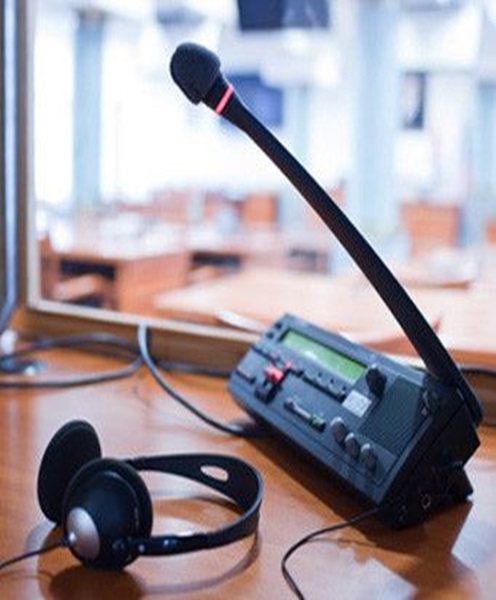
An interpreter microphone is an audio input device used by a professional interpreter to capture translated speech and feed it into a simultaneous interpretation system.
During an interpretation session, the interpreter listens to the original speaker through a headset. The interpreter then translates the message into another language and speaks into the microphone connected to the interpreter console or compatible interpretation equipment.
The microphone captures the translated voice and sends it to the relevant audio input. The system routes that audio to the assigned language channel, allowing delegates to listen through their interpretation receivers.
An interpreter microphone may be integrated into an interpreter console or supplied as a separate compatible microphone, depending on the system design.
It is important to distinguish an interpreter microphone from a standard presentation microphone. A presentation microphone is used by the original speaker to address the audience, while an interpreter microphone is used by the language professional to deliver the translation.
How an Interpreter Microphone Works
An interpreter microphone operates within a wider simultaneous interpretation arrangement.
The process generally follows these stages:
-
The original speaker talks: The speaker uses a microphone connected to the conference audio system.
-
The interpreter receives the audio: The original speech is routed to the interpreter’s console.
-
The interpreter listens: A compatible interpreter headset allows the interpreter to monitor the source audio.
-
The interpreter translates: The interpreter speaks the translated message into the interpreter microphone.
-
The microphone captures the speech: The microphone converts the interpreter’s voice into an audio signal.
-
The console routes the translation: The interpreter console or system assigns the outgoing audio to the appropriate language channel.
-
The interpretation system distributes the audio: The translated channel is sent through the relevant transmission equipment.
-
Delegates listen: Compatible receivers allow attendees to select and hear the translated language.
The interpreter microphone must work correctly with the console or audio interface. The connection type, microphone power requirements, sensitivity and audio configuration depend on the equipment model.
Why Hire Interpreter Microphones from Janeson Rentals?
Purchasing specialist interpretation microphones may not be practical for organisations that only arrange multilingual events occasionally. Hiring offers a flexible way to access the required equipment for a conference, meeting or training programme.
Janeson Rentals supports interpreter microphone hire in Nairobi and across Kenya, subject to availability and delivery arrangements.
1. Cost-Effective Access to Specialist Audio Equipment
Interpreter microphones are designed for a particular professional audio application. Hiring allows organisers to obtain compatible equipment without investing in a permanent inventory.
This is useful for:
-
International conferences.
-
Corporate seminars.
-
Diplomatic functions.
-
Government meetings.
-
Academic conferences.
-
Multilingual workshops.
-
International religious gatherings.
-
Institutional training programmes.
2. Clearer Delivery of Translated Speech
The microphone is the point at which the interpreter’s voice enters the interpretation system. Suitable equipment and correct audio configuration help produce clear translated speech for delegates.
The microphone should be selected according to the interpreter’s working position and the requirements of the console.
3. Compatibility with Interpretation Consoles
Interpreter microphones are usually designed to work with specific consoles or audio interfaces. Hiring the microphone together with compatible interpretation equipment can make system planning easier.
4. Flexible Event Arrangements
Different events may require different numbers of interpreter positions. Hiring allows organisers to arrange the required microphone equipment according to the number of interpreters and language channels.
5. Coordination with Other Conference Equipment
Janeson Rentals can discuss interpreter microphone hire alongside other event audio and interpretation equipment, subject to availability and compatibility.
Related equipment may include:
-
Interpreter consoles.
-
Interpreter headsets.
-
Simultaneous interpretation systems.
-
Interpretation transmitters.
-
Wireless interpretation receivers.
-
Delegate receivers.
-
Conference microphones.
-
Audio mixers.
-
Public address systems.
Types and Designs of Interpreter Microphones
The appropriate microphone depends on the interpretation console, the interpreter’s working environment and the system’s audio design.
Gooseneck Interpreter Microphones
A gooseneck microphone has an adjustable elongated stem that allows the microphone capsule to be positioned near the interpreter’s mouth.
This design is useful for fixed interpreter workstations where the microphone is mounted on or connected to a console.
The adjustable stem allows the interpreter to establish a comfortable speaking position while keeping the microphone within a suitable distance.
Integrated Console Microphones
Some interpretation consoles have microphones designed as part of the console arrangement. These may be detachable or integrated, depending on the equipment.
Integrated microphone designs help maintain an organised interpreter workstation and can reduce the need for separate microphone stands.
External Microphones for Compatible Interpretation Systems
Some interpretation setups support external microphone connections. In these cases, the microphone must match the console or interface requirements.
Compatibility should be confirmed before hiring because microphone connections and power requirements can differ between systems.
Headset Microphone Arrangements
Certain specialist communication arrangements use a headset with an integrated microphone. These should only be used where supported by the interpretation equipment.
An ordinary headset microphone should not automatically be treated as compatible with a professional interpreter console.
Important Features to Consider When Hiring an Interpreter Microphone
Selecting the right microphone involves several technical considerations.
Audio Clarity
The microphone should capture the interpreter’s voice clearly and consistently. Good intelligibility is especially important when interpreting technical presentations, names, numbers and detailed discussions.
Directional Characteristics
Different microphones have different pickup patterns. A suitable design can help capture the interpreter’s voice while reducing unwanted sound from the surrounding environment.
The correct choice depends on the microphone’s position and the acoustic conditions inside the booth.
Connector Compatibility
The microphone must connect correctly to the interpreter console or audio interface. Organisers should confirm the connector type and wiring arrangement before hiring.
Power Requirements
Some microphones require power from the connected equipment, while others may use a separate power arrangement. The technical team should confirm what the console supports.
Microphone Positioning
The microphone should be positioned appropriately to capture the interpreter’s voice without obstructing documents, screens or other console controls.
Durability
Professional conference equipment may be used for extended sessions and repeated event setups. The microphone should be inspected for damaged connectors, loose components and cable faults before the programme.
Noise Handling
Interpretation booths are designed to provide a suitable working environment, but some background noise may still be present. The microphone and booth should work together to provide clear speech capture.
Interpreter Microphone Versus Conference Microphone
Although both products capture speech, they serve different users and operating environments.
A conference microphone is generally used by speakers, chairpersons and delegates during meetings. It may be mounted on a conference table or integrated into a delegate microphone unit.
An interpreter microphone is used by the interpreter to deliver translated speech into the interpretation system.
For example, during an international board meeting, the chairperson may speak through a conference microphone while the interpreter delivers the translated version through an interpreter microphone.
The two microphones may form part of the same event audio arrangement, but their connections and functions are different.
Events That Require Interpreter Microphone Hire
International Conferences
International conferences frequently require interpreters to translate keynote presentations, panel discussions and audience questions. Interpreter microphones capture the translated speech for distribution to delegates.
Diplomatic Meetings
Diplomatic functions may involve formal speeches, bilateral discussions and international representatives. Clear interpreter audio is essential when translated communication is required.
Corporate Forums and Business Summits
Multinational businesses may organise conferences involving executives, partners, employees and clients who speak different languages. Interpreter microphones support translated presentations and discussions.
Government Meetings
Government institutions may arrange international forums, public consultations and official meetings that require professional language interpretation.
Academic Conferences
Universities and research institutions may invite international speakers to deliver technical presentations. Interpreter microphones allow language professionals to communicate the translated material through the interpretation system.
Training and Workshops
Multilingual training sessions may involve demonstrations and detailed explanations. Interpreter microphones help distribute translated instructions to participants.
International Religious Gatherings
Religious conferences and international ministry events may require interpretation of sermons, presentations and discussions for participants who speak different languages.
Planning the Number of Interpreter Microphones
The required number of microphones depends on the number of interpreter positions and the console configuration.
Organisers should establish:
-
Number of language combinations.
-
Number of interpreter booths.
-
Number of interpreters.
-
Number of simultaneous working positions.
-
Whether microphones are integrated into consoles.
-
Whether spare microphones are required.
-
The connection requirements of the existing interpretation equipment.
Some interpretation arrangements involve interpreters working in pairs and alternating during a session. The number of microphones should therefore be determined by the actual console and booth arrangement rather than simply matching the number of interpreters.
Integrating Interpreter Microphones with Other Equipment
An interpreter microphone must be part of a correctly configured audio chain.
The following equipment may be required:
-
Interpreter console: Provides controls for source monitoring and outgoing interpretation channels.
-
Interpreter headset: Allows the interpreter to listen to the speaker or selected audio feed.
-
Interpreter microphone: Captures translated speech.
-
Interpretation transmitter: Distributes the translated audio through the supported transmission method.
-
Wireless interpretation receiver: Allows delegates to receive the selected language channel.
-
Interpretation booth: Provides a dedicated working environment for interpreters.
All components must be compatible and correctly configured. An incorrect connection or channel assignment can prevent delegates from receiving the intended translation.
Technical Testing and Microphone Setup
Before the event, the technical team should test each interpreter microphone as part of the complete interpretation system.
A practical checklist includes:
-
Inspecting the microphone and connector.
-
Confirming compatibility with the interpreter console.
-
Checking microphone power requirements.
-
Positioning the microphone appropriately.
-
Testing the interpreter’s voice level.
-
Checking for distortion, unwanted noise or feedback.
-
Confirming that the correct language channel receives the audio.
-
Testing transmission to delegate receivers.
-
Checking the audio from different positions in the audience.
-
Conducting a rehearsal with the interpreters.
Microphone gain should be set appropriately. Excessive gain can introduce noise or distortion, while insufficient gain can make the translation difficult to hear.
The technical team should also ensure that the interpreter can mute the microphone when necessary, using the controls provided by the console or system.
Why Choose Janeson Rentals for Interpreter Microphone Hire?
Janeson Rentals supports conference organisers, event planners, institutions and production companies seeking professional event equipment in Kenya.
Interpreter microphone hire can be discussed alongside interpreter consoles, headsets, simultaneous interpretation systems, transmitters, receivers and other conference audio equipment.
Coordinating these components helps organisers establish a complete interpretation workflow rather than sourcing individual accessories without checking compatibility.
When requesting a quotation, provide the event date, venue, number of interpreter positions and details of the interpretation console being used. If you already have a system, share the make and model so that microphone compatibility can be assessed.
Interpreter Microphone Hire in Nairobi and Across Kenya
Nairobi hosts international conferences, corporate forums, diplomatic meetings, academic seminars and government events that may require professional interpretation facilities.
Janeson Rentals offers interpreter microphone hire and rental for organisers planning multilingual events in Nairobi. Enquiries can also be made for functions in other parts of Kenya, subject to equipment availability and delivery arrangements.
Whether you are arranging a conference in a hotel, an institutional meeting, a university seminar or a corporate summit, suitable interpreter microphones should be included in the technical planning process.
Book Interpreter Microphone Hire in Kenya
Are you organising an international conference, multilingual seminar, diplomatic meeting or corporate event? Janeson Rentals can assist with interpreter microphone hire and rental in Kenya.
Contact Janeson Rentals with your event date, location, number of interpreter positions and console specifications. Confirming compatibility and audio requirements in advance helps your team prepare a reliable interpretation setup.
Choose Janeson Rentals for interpreter microphone rental in Nairobi and across Kenya.