Monitoring Headphones Hire and Rental in Kenya
Introduction
Reliable audio monitoring is essential in professional recording, broadcasting, video production and live event management. Sound operators, producers, presenters and recording professionals need to hear audio clearly so they can identify technical problems, assess sound quality and maintain consistent production standards.
Monitoring headphones provide a personal listening solution for evaluating audio signals without relying entirely on loudspeakers. They allow users to listen directly to a recording, mixer output, microphone feed or playback source.
Whether you are producing a podcast, recording an interview, managing a livestream, editing a documentary or operating sound equipment at a corporate event, suitable monitoring headphones can support an effective production workflow.
Janeson Rentals offers monitoring headphones hire and rental in Nairobi, Kenya, providing access to audio monitoring equipment for temporary recording sessions, professional productions, events and media projects.
Hiring monitoring headphones is useful for production teams that need additional listening equipment for specific assignments. It also provides an option for businesses, studios and event organisers that do not require permanent ownership of multiple headphone units.
Based in Nairobi and serving clients across Kenya, Janeson Rentals supports clients looking for practical audio, event and production equipment hire solutions.
What Are Monitoring Headphones?
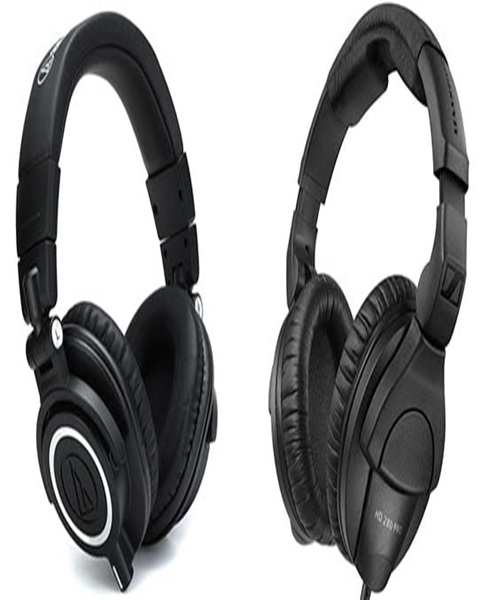
Monitoring headphones are headphones used to listen to audio signals during recording, production, playback or sound evaluation.
Their main purpose is to help users hear what is happening within an audio system. Depending on the model and application, they may be used to assess recorded dialogue, monitor microphone inputs, listen to music, check sound levels or evaluate audio during post-production.
Monitoring headphones are used in different professional environments, including:
-
Recording studios.
-
Podcast production spaces.
-
Video and film production.
-
Broadcasting environments.
-
Live sound operations.
-
Conference production.
-
Music production.
-
Audio editing rooms.
-
Voice-over recording sessions.
-
Livestreaming and hybrid events.
Monitoring headphones may use open-back or closed-back construction. Closed-back models are generally useful when reducing sound leakage is important, while open-back models are often selected for listening in quiet environments.
The appropriate type depends on the task, listening environment and audio equipment being used.
Why Hire Monitoring Headphones Instead of Buying?
Monitoring headphones are useful in many production environments, but purchasing multiple pairs may not be practical for occasional assignments.
Hiring provides a flexible way to access the listening equipment required for a project.
1. Access Equipment for Professional Audio Work
Audio production often requires headphones for different members of a team.
A recording engineer may need to monitor incoming audio while performers use separate headphones to listen to playback or a backing track.
Hiring additional monitoring headphones can help support these requirements without purchasing multiple units.
2. Support Temporary Recording Projects
Businesses may occasionally need to record interviews, training material, presentations or promotional content.
Monitoring headphones can be hired for the duration of the recording project instead of being purchased and stored between assignments.
3. Improve Production Monitoring
Headphones allow operators to listen directly to an audio signal and identify problems that may not be obvious during recording.
These may include background noise, microphone interference, distortion, incorrect channel routing or unexpected volume changes.
4. Support Multiple Users
Podcasts, conferences and recording sessions may involve several participants who need to monitor sound.
Hiring additional headphones can help accommodate presenters, guests, sound operators and production assistants.
The number of headphones required should be considered alongside the available headphone outputs and distribution equipment.
5. Flexible Budget Management
Purchasing professional monitoring equipment can increase production costs.
Rental provides an alternative for clients who need equipment for a particular event, studio session or media assignment.
Monitoring Headphones for Studio Recording
Recording studios use monitoring headphones to help musicians, vocalists, producers and engineers listen to audio during recording sessions.
A vocalist may need to hear an instrumental track while recording. A musician may need to monitor a click track or accompaniment. The recording engineer may need to listen to the microphone input and check the recorded signal.
Monitoring headphones can support:
-
Vocal recording.
-
Instrument recording.
-
Voice-over sessions.
-
Podcast production.
-
Music production.
-
Playback and review.
-
Recording quality checks.
-
Multitrack audio sessions.
For recording applications, closed-back headphones are often useful because they help reduce sound leakage into nearby microphones.
The headphones should be comfortable, compatible with the studio’s audio interface or mixer and capable of producing an appropriate listening level.
Monitoring Headphones for Podcast Production
Podcasts depend on understandable dialogue and consistent sound quality.
Monitoring headphones allow presenters, guests and producers to hear the recording during the session. This helps identify microphone placement problems, changes in speaking volume and unwanted background sounds.
For a podcast involving several participants, each person may require a separate headphone connection.
A headphone distribution amplifier can be useful when several users need to listen to the same audio source. Some mixers and interfaces also provide multiple headphone outputs.
The production team should consider whether everyone needs the same mix or whether individual volume and monitoring control is required.
Monitoring headphones are useful for:
-
Interview podcasts.
-
Business podcasts.
-
Educational discussions.
-
Video podcasts.
-
Panel recordings.
-
Remote guest productions.
-
Branded audio content.
A test recording should always be conducted before the main session to confirm that the microphones and monitoring connections are working correctly.
Monitoring Headphones for Video and Film Production
Audio monitoring is a vital part of video production because problems with recorded sound can affect the final video even when the visuals are excellent.
During filming, sound recordists and camera operators may use headphones to monitor microphone signals and check whether dialogue is being captured clearly.
Monitoring headphones can help identify:
-
Background conversations.
-
Traffic and environmental noise.
-
Wind interference.
-
Microphone handling noise.
-
Wireless microphone interference.
-
Distortion.
-
Unwanted changes in recording levels.
-
Connection or routing problems.
They can be used with compatible cameras, portable recorders, audio interfaces and production mixers.
For film and documentary work, monitoring should take place throughout recording rather than only after filming has ended. This gives the production team an opportunity to correct problems while the scene or interview is still available.
Monitoring Headphones for Livestreaming and Broadcasting
Livestreaming and broadcasting involve real-time audio management.
A production operator may need to listen to microphone inputs, music playback, remote participants and the final programme audio.
Monitoring headphones help the operator check the audio signal before it reaches the audience.
For a livestream, monitoring can help identify:
-
Microphones that are not receiving a signal.
-
Audio that is too quiet or too loud.
-
Distorted sound.
-
Missing audio channels.
-
Unwanted background noise.
-
Delays or echo from remote participants.
-
Incorrect audio routing.
In a hybrid event, monitoring may involve both the venue sound system and the audio being transmitted to online viewers.
These are not always identical signals. A production team should establish which output is being monitored and use a suitable audio path to check the actual programme feed.
Monitoring Headphones for Conferences and Corporate Events
Conferences, seminars, meetings and corporate events often require sound operators to monitor microphones and programme audio.
Monitoring headphones can help technical personnel check audio before and during an event.
For example, an operator may listen to a microphone input while a presenter is speaking, ensuring that the signal is reaching the mixer correctly.
During panel discussions, headphones can help identify whether each microphone is working and whether the audio levels are consistent.
For recorded or livestreamed conferences, monitoring headphones can also help check the sound being sent to the recording device or streaming system.
Janeson Rentals supports event equipment hire requirements for conferences, corporate functions, presentations and other professional events.
Important Features to Consider When Hiring Monitoring Headphones
Selecting monitoring headphones involves considering their intended use, acoustic characteristics and compatibility with the equipment.
1. Open-Back or Closed-Back Construction
Monitoring headphones are available in both open-back and closed-back designs.
Closed-back headphones have enclosed ear cups that help reduce external sound and headphone leakage. They are often suitable for microphone recording and noisy environments.
Open-back headphones allow air and sound to pass through the ear cups. They are commonly used for critical listening in quiet rooms, although external noise can interfere with monitoring.
The recording environment should guide the choice.
2. Frequency Response
Frequency response describes how headphones reproduce different frequencies.
For monitoring, users may want to hear dialogue, music, bass, midrange and high-frequency details clearly.
A headphone’s frequency response influences how the audio is perceived. A model designed for casual listening may emphasise certain frequencies, so it should not automatically be treated as a neutral studio reference.
3. Impedance and Output Requirements
Headphone impedance affects the electrical load presented to the device driving the headphones.
Some models work well with common audio interfaces and mixers, while others may require a more powerful headphone amplifier.
Before hiring, confirm that the headphones can be driven adequately by the intended audio equipment.
4. Sensitivity and Listening Level
Sensitivity influences how loudly headphones can play with a given input signal.
The monitoring device should provide a suitable listening level without requiring excessive output settings.
Users should avoid prolonged listening at high volumes to protect their hearing.
5. Comfort and Ergonomics
Monitoring sessions can last several hours, so comfort matters.
Consider:
-
Headband padding.
-
Ear-pad material.
-
Weight.
-
Clamping pressure.
-
Over-ear or on-ear construction.
-
Adjustability.
-
Ventilation.
A comfortable fit can help reduce fatigue during long editing and recording sessions.
6. Cable and Connector Compatibility
Monitoring headphones may use 3.5 mm or 6.35 mm connectors, among other connection arrangements.
Check that the headphones can connect to the intended recorder, mixer, camera, audio interface or headphone amplifier.
Also consider cable length and whether the headphones use a fixed or detachable cable.
7. Durability
Professional monitoring equipment may be used in studios, event venues and temporary production locations.
Durable headbands, reliable hinges, good cable connections and replaceable ear pads can be useful characteristics.
Equipment should also be handled and stored carefully between sessions.
Monitoring Headphones for Audio Editing and Post-Production
Audio editing requires detailed listening and repeated playback.
Editors may use monitoring headphones to evaluate dialogue, music, sound effects and other audio elements while working on recorded content.
They can support:
-
Podcast editing.
-
Documentary editing.
-
Film post-production.
-
Corporate video editing.
-
Voice-over editing.
-
Music review.
-
Audio cleanup.
-
Sound design.
Monitoring headphones are particularly useful when loudspeakers are not practical, such as in shared offices or temporary editing spaces.
However, critical mixing decisions should be checked against additional reference systems where possible. Headphones can present sound differently from loudspeakers, and individual models may have their own frequency-response characteristics.
Monitoring Headphones for Live Sound Production
Live sound operators may use headphones to check audio signals, listen to playback sources or monitor specific outputs during event preparation.
They can be useful when setting up a PA system, testing microphones or checking recorded audio feeds.
In a live production, headphones may be connected to a mixer, recorder or monitoring output. The operator should confirm which signal is being monitored because listening to an input channel is different from listening to the final master output.
For large productions, the technical team should establish monitoring responsibilities and ensure that the required outputs are available.
Monitoring Headphones and Complementary Audio Equipment
Monitoring headphones work alongside several other pieces of audio equipment.
Audio Interface
An audio interface connects compatible microphones and instruments to a computer. It may provide headphone outputs for monitoring recording and playback.
Digital Audio Recorder
A digital audio recorder captures sound and may provide headphone monitoring for checking incoming signals.
Audio Mixer
An audio mixer manages multiple audio sources and may provide headphone outputs for listening to selected channels or the master mix.
Headphone Amplifier
A headphone amplifier provides additional headphone outputs or driving power, depending on its design.
It can be useful when several people need to monitor the same audio source.
Microphones
Handheld, lavalier, condenser, dynamic and shotgun microphones capture sound for different recording applications.
Studio Monitor Speakers
Studio monitors provide loudspeaker-based audio reference. They can complement headphone monitoring during editing and production.
Preparing Monitoring Headphones for a Recording or Event
Before the recording or event begins, check the headphones and their connection to the audio system.
Confirm that the correct output is selected and that the audio signal reaches both ear cups. Check the cable and connectors for visible damage.
Set a comfortable listening level and conduct a test using the actual microphone or playback source.
For multi-person sessions, verify that each participant has access to the intended audio feed. If a headphone amplifier or distribution system is being used, confirm that all outputs are functioning.
During the session, monitor audio regularly rather than assuming that an initial test guarantees that everything will remain correct.
After the session, organise and protect the headphones for transport or return.
Why Choose Janeson Rentals for Monitoring Headphones Hire?
Janeson Rentals provides equipment hire and rental solutions for businesses, recording professionals, event organisers, content creators and production teams in Kenya.
Monitoring headphones are useful across many applications, from podcast recording and studio production to livestreaming, video editing and conference sound management.
Hiring allows clients to access suitable monitoring equipment for temporary projects without purchasing additional headphones that may not be used regularly.
Janeson Rentals supports clients looking for practical equipment solutions for professional events and media productions.
Based in Nairobi and serving clients across Kenya, Janeson Rentals provides an option for customers planning audio and event equipment requirements.
Book Monitoring Headphones from Janeson Rentals
Are you preparing for a recording session, podcast, conference, livestream, video production or audio editing project?
Contact Janeson Rentals to enquire about monitoring headphones hire and rental in Nairobi and across Kenya.
When requesting a rental, provide the number of users, intended application, audio equipment you plan to connect and rental dates. This will help establish the most appropriate headphone arrangement for your production.
Choose suitable monitoring equipment and prepare for clear, focused audio monitoring with Janeson Rentals.