Simultaneous Interpretation System Hire and Rental in Kenya
International conferences, diplomatic meetings, corporate summits and multilingual events bring together people who may speak different languages. For such gatherings to run smoothly, participants need to understand presentations, discussions and announcements without waiting for each speaker to finish before receiving a translation.
A simultaneous interpretation system provides a practical solution by allowing interpreters to translate spoken information in real time while delegates listen to the translated audio through compatible receivers and headsets.
Janeson Rentals offers simultaneous interpretation system hire and rental solutions in Kenya for event organisers, conference planners, government institutions, international organisations, businesses and professional audiovisual production companies.
Whether you are organising an international conference in Nairobi, a diplomatic summit, a multilingual business meeting, a regional workshop or an international exhibition, a suitable interpretation system can help participants communicate across language barriers.
Hiring this equipment is particularly useful for temporary events where purchasing a complete interpretation system would be expensive or unnecessary.
What Is a Simultaneous Interpretation System?
A simultaneous interpretation system is a specialised audio communication setup that allows interpreters to translate a speaker’s words into another language while the original speech is taking place.
The interpreter listens to the speaker through a headset and delivers the translation through a microphone connected to an interpretation console or system.
Delegates who need the translated version select the appropriate language channel using compatible receivers or interpretation equipment.
Unlike consecutive interpretation, where a speaker pauses to allow the interpreter to translate, simultaneous interpretation takes place continuously alongside the original presentation.
This makes it especially useful for events with tight programmes, multiple speakers and large audiences.
A complete simultaneous interpretation setup may include:
-
Interpreter consoles.
-
Interpreter headsets.
-
Interpreter microphones.
-
Central interpretation equipment.
-
Language distribution units.
-
Wireless or infrared transmitters.
-
Delegate receivers.
-
Delegate headphones or earpieces.
-
Audio distribution equipment.
-
Connection cables and power supplies.
-
Technical monitoring equipment.
The exact equipment depends on the interpretation technology, number of languages, number of interpreters and delegate capacity.
How a Simultaneous Interpretation System Works
A simultaneous interpretation system receives the original speaker’s audio and makes it available to the interpreter.
The interpreter listens through a headset and translates the speech into the required language using an interpreter console or compatible microphone arrangement.
The translated audio is then routed through the system to the relevant language channel.
Delegates select their preferred language using compatible receivers and listen through headphones or earpieces.
A typical workflow involves the following stages:
-
Original speech: The speaker addresses the audience using a conference microphone or sound system.
-
Audio routing: The speaker’s audio is supplied to the interpretation system.
-
Interpreter monitoring: The interpreter listens to the original speech through a headset.
-
Translation: The interpreter speaks the translated message into the interpreter microphone.
-
Language distribution: The interpretation system routes the translated audio to the appropriate language channel.
-
Delegate listening: Participants select the required language and listen through their receivers.
For example, a conference speaker may deliver a presentation in English while interpreters provide French and Kiswahili translations. Delegates can select the language they understand using compatible receiver equipment.
The system must be configured correctly so that each language is distributed to the intended audience.
Why Hire a Simultaneous Interpretation System?
Hiring a simultaneous interpretation system provides a practical way to support multilingual communication without purchasing expensive specialist equipment.
Supports Multilingual Communication
International events often involve participants from different linguistic backgrounds.
A simultaneous interpretation system allows delegates to follow presentations in their preferred supported language.
Saves Conference Time
Because translation happens while the original speaker is talking, the programme does not need to stop after every sentence or presentation section for consecutive interpretation.
This is especially useful for conferences with several sessions and speakers.
Improves Delegate Participation
Participants who understand the discussion can follow presentations more effectively, ask questions and contribute to discussions.
Suitable for Large Audiences
Depending on the system configuration, multiple delegates can listen to the same translated language channel through individual receivers.
This makes simultaneous interpretation suitable for conferences, summits and international meetings.
Supports Professional Events
A dedicated interpretation system helps event organisers create an appropriate environment for multilingual communication.
Flexible for Temporary Events
Simultaneous interpretation equipment is specialised and may not be needed regularly.
Hiring allows organisers to access the required equipment for the event period without maintaining a permanent system.
Applications of Simultaneous Interpretation System Rental in Kenya
International Conferences
International conferences often bring together speakers, delegates and experts from different countries.
A simultaneous interpretation system helps participants follow presentations and discussions in supported languages.
It can be used for business conferences, professional forums, industry events and international knowledge-sharing sessions.
Diplomatic Meetings and Government Events
Diplomatic meetings, bilateral discussions and international government gatherings may involve representatives who speak different languages.
Interpretation equipment can support communication between participants and help maintain the flow of formal proceedings.
Corporate Meetings and Business Summits
Multinational companies and organisations may hold meetings involving regional and international teams.
Simultaneous interpretation can help employees, executives and business partners participate in discussions more effectively.
International Exhibitions and Trade Shows
International exhibitions may attract exhibitors, buyers and visitors from different countries.
Interpretation equipment can support presentations, product demonstrations, panel discussions and business meetings.
Workshops and Training Programmes
Professional training programmes may involve participants who speak different languages.
A suitable interpretation system allows trainers to deliver information while interpreters provide real-time translations.
Religious Conferences
Large religious gatherings and international ministry conferences may require translation for attendees from different linguistic backgrounds.
Simultaneous interpretation equipment can distribute translated messages through individual receivers.
Medical and Academic Conferences
Medical congresses, university conferences and academic seminars may attract international participants.
Interpretation equipment can help attendees follow technical presentations and discussions in supported languages.
International Launches and Corporate Events
Companies launching products or presenting services to international audiences may require multilingual communication.
A simultaneous interpretation system can support presentations, panel sessions and audience discussions.
Types of Simultaneous Interpretation Systems
Interpretation systems are available in different configurations. The appropriate solution depends on the venue, number of languages, delegate capacity and event requirements.
Infrared Interpretation System
An infrared interpretation system distributes translated audio using infrared light signals.
It typically uses a transmitter and infrared radiators to distribute language channels to compatible receivers.
Infrared systems are commonly considered for indoor conference environments where controlled signal coverage is required.
Their performance depends on the room layout, transmitter positioning, obstacles and equipment configuration.
Radio Frequency Interpretation System
Radio frequency interpretation systems distribute translated audio through compatible radio transmissions.
Delegates use receivers configured to the appropriate language channels.
The required frequency arrangements must comply with applicable regulatory requirements.
Digital Interpretation System
Digital interpretation systems process and distribute audio using digital technology.
Depending on the equipment, they may offer advanced channel management, audio processing and system monitoring features.
Portable Interpretation System
Portable interpretation systems are designed for events that require a more mobile equipment arrangement.
They may be suitable for small meetings, guided visits, workshops and temporary multilingual activities.
The number of interpreters and listeners supported depends on the specific equipment.
Conference Interpretation System
A conference interpretation system is designed for organised multilingual meetings and may integrate interpreter consoles, language distribution equipment and delegate receivers.
It can be configured around the requirements of formal conferences and large business gatherings.
Components of a Simultaneous Interpretation System
A complete interpretation setup requires several compatible components.
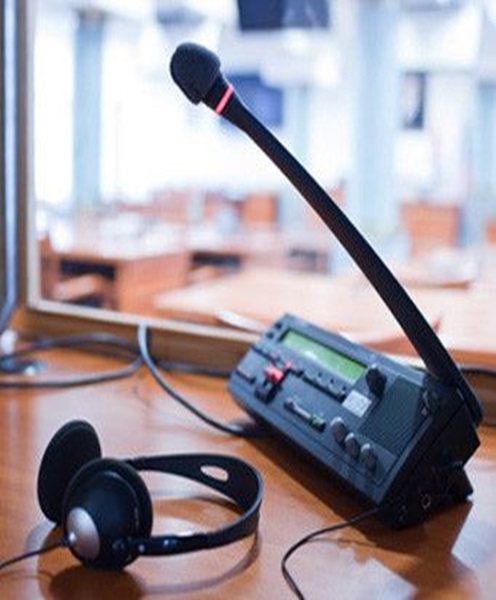
Interpreter Console
The interpreter console is the dedicated operating device used by interpreters to monitor incoming audio and deliver translated speech.
Depending on the model, it may provide language selection, microphone controls, audio monitoring and other interpretation functions.
Interpreter Headset
The interpreter headset allows the interpreter to hear the original speaker and monitor relevant audio channels.
Some setups use separate microphones and headphones, while others may use integrated headset arrangements.
Interpreter Microphone
The microphone captures the interpreter’s translated speech and sends it into the interpretation system.
Language Distribution Equipment
This equipment routes translated audio to the correct language channels.
The exact configuration depends on the system design and number of languages.
Transmitters and Radiators
Depending on the interpretation technology, transmitters and radiators distribute audio to compatible delegate receivers.
Delegate Receivers
Delegates use receivers to select and listen to their preferred language channel.
Delegate Headphones and Earpieces
Headphones or earpieces allow individual participants to listen to translated audio without interfering with other attendees.
Audio Integration Equipment
The interpretation system may require connections to the main conference sound system, microphones and audio distribution equipment.
Proper signal routing is important to ensure that interpreters receive clear original audio.
What to Consider Before Hiring a Simultaneous Interpretation System
Choosing an appropriate system requires careful planning.
Number of Languages
Identify the original presentation language and all languages that need interpretation.
This determines the number of interpretation channels and interpreter positions required.
Number of Delegates
Estimate how many participants will need receivers and headphones.
Always plan the receiver quantity around the expected audience and any additional operational requirements.
Number of Interpreters
Interpretation is demanding work, particularly during long sessions.
Professional interpreter scheduling should account for language combinations, session duration and the need for interpreter rotation.
Venue Layout
Consider the size of the conference room, seating arrangement, walls, partitions and interpreter working positions.
Infrared and radio-frequency systems have different coverage considerations.
Audio Quality
Interpreters need clear and intelligible audio.
The main conference microphone and sound system should be configured so that interpreters receive a suitable audio feed.
Receiver Distribution
Plan how delegates will collect, operate and return their receivers.
This is especially important at conferences with large attendance.
Equipment Compatibility
Confirm that interpreter consoles, transmitters, receivers, headsets and other accessories are compatible.
Rehearsals and Testing
Test the complete system before the conference begins.
Check each language channel, interpreter microphone, receiver and listening device.
Simultaneous Interpretation vs Consecutive Interpretation
Simultaneous interpretation and consecutive interpretation are two different approaches to translating spoken communication.
In simultaneous interpretation, the interpreter translates while the speaker continues talking. Delegates listen to the translated audio through a dedicated interpretation system.
In consecutive interpretation, the speaker pauses at intervals while the interpreter delivers the translation.
Simultaneous interpretation is generally useful for large conferences, multilingual summits and events with tight schedules.
Consecutive interpretation may be suitable for smaller meetings, interviews and discussions where pauses can be accommodated.
The choice depends on the event format, available interpreters, audience size and programme requirements.
Why Choose Janeson Rentals for Simultaneous Interpretation System Hire?
Janeson Rentals provides event and audiovisual equipment hire solutions in Nairobi and across Kenya.
Simultaneous interpretation system rental is useful for organisers who need professional interpretation equipment for temporary multilingual events.
Clients can enquire about equipment for:
-
International conferences.
-
Diplomatic summits.
-
Corporate meetings.
-
Government functions.
-
Academic conferences.
-
Medical congresses.
-
International exhibitions.
-
Religious gatherings.
-
Multilingual workshops.
-
Business presentations.
When making an enquiry, provide the event date, venue, expected number of delegates, number of languages and interpretation requirements.
This information helps establish the equipment configuration needed for the event.
Book a Simultaneous Interpretation System for Hire in Kenya
Planning an international conference, multilingual meeting or professional event? Contact Janeson Rentals to enquire about simultaneous interpretation system hire and rental in Nairobi and across Kenya.
Share your event details, language requirements, expected attendance and programme schedule. You can also enquire about interpreter consoles, delegate receivers, interpreter headsets, microphones and supporting conference audio equipment.
Choose Janeson Rentals for simultaneous interpretation system hire in Kenya and help every delegate follow your event in a language they understand.