Two-Way Radio Hire and Rental in Kenya
Effective communication is essential when people work across different locations, departments or operational areas. Whether you are organising a corporate conference, managing event security, coordinating a concert, supervising a construction site or overseeing logistics, your team needs a practical way to exchange information.
Two-way radios provide a convenient communication solution by allowing users to transmit and receive voice messages through compatible radio devices. Unlike ordinary mobile phone calls, many two-way radio systems allow users to communicate through push-to-talk controls without dialling individual telephone numbers.
Janeson Rentals offers two-way radio hire and rental solutions in Kenya for businesses, event organisers, production companies, security teams and organisations that need temporary communication equipment.
From small corporate functions in Nairobi to large outdoor events and operational projects across Kenya, two-way radio rental can help teams coordinate activities and respond to changing situations.
Hiring is particularly useful when communication equipment is required for a limited period. Instead of purchasing and maintaining a complete radio fleet, organisations can enquire about suitable equipment for their specific event or project.
What Is a Two-Way Radio?
A two-way radio is a communication device that can both transmit and receive audio signals using radio frequencies.
It allows two or more compatible users to exchange voice messages without relying on a conventional telephone network. Depending on the system, communication may take place between individual radios, within a shared channel or through a more advanced radio network.
Two-way radios are commonly used in:
-
Event management and coordination.
-
Security and crowd management.
-
Construction and engineering.
-
Warehousing and logistics.
-
Hospitality and facility management.
-
Transportation operations.
-
Film and television production.
-
Outdoor activities and field operations.
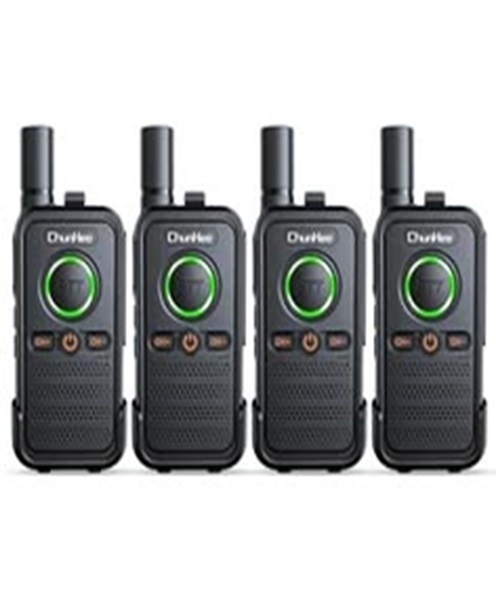
A basic two-way radio system may consist of handheld radios, rechargeable batteries, antennas, chargers and compatible communication accessories.
Professional systems may offer additional features such as multiple channels, programmable controls, scanning functions, display screens and supported headset connections.
How Two-Way Radios Work
Two-way radios operate through radio-frequency communication. One user transmits a message while another compatible radio receives it.
In a typical push-to-talk arrangement, the user presses a button, speaks into the microphone and releases the button when finished. Other radios configured to receive the transmission can hear the message.
A standard equipment arrangement may include:
-
Handheld two-way radio units.
-
Compatible antennas.
-
Rechargeable batteries.
-
Individual or multi-unit charging equipment.
-
Radio earpieces or headsets.
-
Belt clips and carrying accessories.
-
Approved programming and configuration.
Some systems use direct radio-to-radio communication, while others may rely on repeaters or additional network equipment to extend coverage.
Actual communication range depends on the equipment, antenna, frequency, terrain, surrounding buildings, interference and operating environment. Advertised maximum ranges should not be treated as guaranteed coverage.
Why Hire Two-Way Radios in Kenya?
Two-way radio hire offers a practical option for organisations that need temporary communication equipment.
Direct Communication Between Team Members
Two-way radios allow staff members to exchange messages without having to make individual phone calls. This is useful when supervisors need to communicate instructions quickly.
Better Coordination Across Departments
Large events and business operations often involve several departments working simultaneously.
For example, an event may have security officers, ushers, technical teams, registration personnel and logistics coordinators. Two-way radios can help these groups exchange updates through organised communication channels.
Mobility and Convenience
Portable radios allow users to communicate while moving around a venue, warehouse, site or outdoor event space, subject to available coverage.
Reduced Dependence on Mobile Networks
Radio-to-radio communication can be useful for routine coordination without depending on individual mobile telephone calls. However, radio coverage and reliability still depend on the radio environment and system configuration.
Cost-Effective Temporary Communication
Purchasing radios for a short-term event or project may not be economical. Two-way radio rental gives organisations access to communication equipment for the required period without the responsibilities of long-term ownership.
Support for Operational Efficiency
When team members can exchange updates promptly, supervisors can coordinate tasks more efficiently. This is particularly valuable during busy events, deliveries, security operations and production schedules.
Applications of Two-Way Radio Rental in Kenya
Event Management and Coordination
Event organisers often supervise different operational teams across a venue. Two-way radios can help event managers communicate with registration staff, ushers, security teams, technical crews and logistics personnel.
They are useful during venue preparation, guest arrival, programme transitions and event breakdown.
Security and Crowd Management
Security personnel may be stationed at entrances, exits, parking areas, restricted zones and other operational positions.
Two-way radios provide a practical communication channel for sharing updates and coordinating routine security activities.
For emergency response, radio procedures should be established in advance and integrated with the venue’s wider safety and emergency arrangements.
Concerts and Music Festivals
Concerts involve coordination between event management, backstage personnel, security teams, logistics staff and technical departments.
Two-way radios can support communication across these teams, particularly when staff members are spread throughout a large venue.
Specialised production intercom equipment may still be required for detailed director-to-camera or technical production communication.
Corporate Conferences and Meetings
Corporate conferences require communication between registration desks, ushers, event coordinators, venue staff and audiovisual teams.
Radio communication can help staff manage speaker arrivals, room changes, guest movement and programme adjustments.
Construction and Engineering Projects
Construction sites often have teams working in different areas. Supervisors may use two-way radios to coordinate routine operations, equipment movement and work schedules.
The selected radios should be suitable for the site’s environmental conditions and operational requirements.
Warehousing and Logistics
Warehouse supervisors, inventory personnel, loading teams and dispatch staff may use two-way radios to coordinate deliveries and movement of goods.
This can be useful in large facilities where staff members are not always within speaking distance.
Hospitality and Facility Management
Hotels, conference centres, shopping facilities and large venues may use radios to coordinate housekeeping, maintenance, security and guest services.
Film and Television Production
Two-way radios can support general production operations, transport coordination, location management and communication between support teams.
For specialised technical production workflows, a dedicated production intercom system may be more suitable.
Outdoor Events and Sporting Activities
Outdoor activities may cover wide spaces where portable radio communication is convenient for coordinating staff and supervisors.
The required coverage should be assessed based on the terrain, distance and equipment capabilities.
Types of Two-Way Radios
Different two-way radio designs serve different communication requirements.
Handheld Two-Way Radios
Handheld radios are portable devices commonly used by security personnel, event organisers, supervisors and logistics teams.
They are convenient for users who need to move around while remaining in communication.
Professional Two-Way Radios
Professional radios may offer advanced programming, channel management, accessories and operational controls.
They are suitable for organisations requiring structured communication arrangements.
Analogue Two-Way Radios
Analogue radios transmit voice communication using analogue radio technology. Their suitability depends on the intended application, available frequencies and compatible equipment.
Digital Two-Way Radios
Digital radios use digital communication technology and may offer features such as improved audio processing, channel organisation and additional functionality, depending on the system.
Analogue and digital equipment should not be assumed to communicate directly without compatible configuration or supporting equipment.
Base-Station Radios
Some two-way radio systems use fixed radio equipment positioned at a control point. These may be useful where communication is managed from a central operational location.
Vehicle-Mounted Radios
Vehicle-mounted radio units are designed for installation in compatible vehicles. They may be useful for transport, fleet management and mobile operational teams.
The appropriate radio type depends on the project’s communication requirements and equipment availability.
Two-Way Radio vs Wireless Walkie-Talkie
A walkie-talkie is a type of two-way radio, so the terms are closely related.
The expression walkie-talkie is commonly used for portable handheld radios that allow users to communicate through push-to-talk controls.
Two-way radio is a broader category that can include handheld, mobile, fixed and other radio communication equipment.
For example, a security team may use handheld walkie-talkies, while a transport organisation may use vehicle-mounted two-way radios.
Both support radio communication, but their physical designs and intended applications can differ.
What to Consider Before Hiring Two-Way Radios
Choosing suitable equipment involves more than determining how many handsets are required.
Number of Users
Identify the number of staff members who need communication devices. Consider supervisors, team leaders and personnel who may require dedicated radios.
Communication Coverage
Consider the venue size, distance between users, building layout, terrain and areas where communication is essential.
If repeaters or additional infrastructure may be needed, this should be assessed before the event.
Radio Type
Determine whether handheld, fixed or vehicle-mounted equipment is appropriate for the project.
Frequency and Regulatory Requirements
Radio equipment must operate on permitted frequencies and comply with applicable Kenyan regulatory requirements. Do not assume that any available frequency can be used without authorisation.
Battery Performance
Confirm that the battery arrangements can support the expected operating schedule. Consider spare batteries and charging equipment where appropriate.
Accessories
Depending on the equipment, users may require earpieces, headsets, carrying clips, spare batteries and chargers.
Operating Environment
Consider whether the radios will be used indoors, outdoors, in dusty environments or in areas exposed to rain.
Do not assume that a radio is waterproof or dustproof unless its specifications confirm this.
Testing and User Training
Test communication at the actual operating location where possible. Brief users on channel selection, push-to-talk operation, charging and basic communication etiquette.
Two-Way Radio Accessories
Accessories can improve convenience and support different communication requirements.
Common accessories include:
-
Radio earpieces for discreet listening.
-
Headsets for supported radio models.
-
Replacement or spare batteries.
-
Single-unit battery chargers.
-
Multi-unit charging stations.
-
Belt clips and carrying accessories.
-
Compatible antennas.
-
Speaker microphones.
-
Radio cases and protective covers.
Compatibility should always be confirmed before arranging the equipment package.
Why Choose Janeson Rentals for Two-Way Radio Hire?
Janeson Rentals provides equipment hire solutions for events, productions and business operations in Nairobi and across Kenya.
Two-way radio rental is a practical option for clients who need temporary communication equipment for a particular event, assignment or operational project.
Clients can enquire about radio equipment for:
-
Corporate conferences.
-
Weddings and private events.
-
Concerts and festivals.
-
Security and crowd management.
-
Exhibitions and brand activations.
-
Construction and engineering projects.
-
Warehouse and logistics operations.
-
Outdoor events.
-
Film and television production support.
When enquiring, share the event date, location, number of users, expected operating hours and communication requirements. This information helps determine the appropriate radio configuration and accessories.
Book Two-Way Radios for Hire in Kenya
If your organisation needs direct communication between staff members, contact Janeson Rentals to enquire about two-way radio hire and rental in Nairobi and across Kenya.
Provide your project details, including the number of radios required, operating environment and duration of hire. You can also ask about compatible radio earpieces, chargers, batteries and other communication accessories.
Choose Janeson Rentals for two-way radio hire in Kenya and support efficient communication across your event or operational team.