Introduction
Communication is one of the most important elements of professional event production. Behind every successful concert, conference, television broadcast, theatre performance or live event is a team of people coordinating technical operations and programme activities.
Sound engineers, lighting operators, camera directors, stage managers and production assistants must communicate accurately to ensure that every part of the event runs according to schedule.
In environments where multiple technical departments operate simultaneously, a dedicated intercom system provides a more organised communication solution than relying entirely on personal mobile phones or informal communication methods.
A wired intercom system provides communication between connected stations through physical cables. It is commonly used in broadcasting facilities, theatres, production control rooms, studios and live event environments where a dedicated communication network is required.
Janeson Rentals offers Wired Intercom System Hire and Rental in Kenya for event organisers, production companies, broadcast teams, theatre operators and audiovisual technicians.
Whether you are coordinating a stage production in Nairobi, managing a live broadcast, organising a corporate event or operating a technical control room, a wired intercom system can help maintain clear communication between authorised crew members.
Hiring a wired intercom system provides access to communication equipment for the duration of a project without the need to purchase a complete installation.
What Is a Wired Intercom System?
A wired intercom system is a communication network that connects multiple users through physical cables.
Unlike wireless intercom systems, which transmit voice communication through radio or other wireless technologies, wired intercom systems use dedicated cable connections between communication stations.
Depending on the system design, the installation may include:
-
Main intercom station or base station.
-
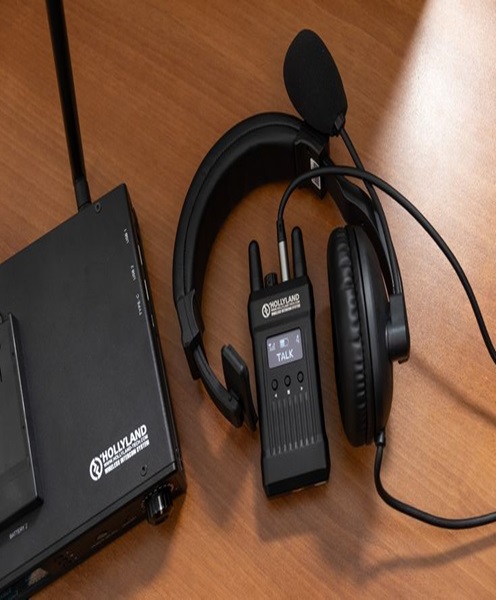
Beltpack communication units.
-
Wired headsets.
-
Desktop intercom stations.
-
Wall-mounted communication panels.
-
Intercom cables.
-
Connection panels.
-
Power supply units.
-
Interface units for system expansion or integration.
Some wired intercom systems use a centralised architecture, while others use party-line configurations in which several users share a common communication circuit.
More advanced systems may support multiple communication channels and separate user groups.
The exact configuration depends on the number of users, communication requirements and system technology.
How Does a Wired Intercom System Work?
A wired intercom system carries voice communication through physical cables connecting the communication stations.
In a typical production setup, a central station or communication circuit links multiple users. Each user may operate a beltpack or desktop station connected to a headset.
When one user speaks into their microphone, the voice signal travels through the communication network to the relevant connected users.
Depending on the system, communication may be continuous full-duplex conversation or controlled through a push-to-talk function.
A wired intercom system can be configured to support different communication arrangements, including:
-
Shared party-line communication.
-
Separate communication channels.
-
Dedicated point-to-point connections.
-
Centralised production communication.
-
Multiple operator stations.
The system’s architecture determines how users communicate and whether separate groups can operate independently.
Why Hire a Wired Intercom System?
Wired intercom systems offer several advantages for production environments where users can operate from fixed or planned positions.
1. Dedicated Physical Communication Connections
A wired intercom system uses physical cables to connect its communication stations.
This provides a dedicated communication pathway rather than relying on a wireless radio connection between each station.
2. Consistent Communication in Suitable Installations
In an appropriately designed installation, wired systems can provide dependable communication between connected stations.
They are particularly useful in environments where cable routes can be planned and protected.
3. No Wireless Coverage Planning Between Connected Stations
Because communication is carried through cables, users do not depend on radio coverage between their connected stations in the same way wireless intercom users do.
However, cable quality, connection integrity and the system’s electrical design remain important.
4. Useful for Fixed Production Positions
Control rooms, theatre booths, broadcast studios and technical operation areas often have designated working positions.
A wired intercom system can connect these positions through a planned cable infrastructure.
5. Suitable for Multi-Department Communication
Different production departments may need to communicate through dedicated channels or shared communication circuits.
Compatible wired systems can provide structured communication arrangements for these workflows.
6. Reduced Dependence on Wireless Batteries
The communication stations in some wired systems receive power through their cable connections or another wired power arrangement.
This can reduce the need for individual wireless batteries, depending on the equipment design.
7. Practical for Temporary Technical Installations
Wired intercom rental allows production teams to access communication equipment for a specific project, including temporary studio setups, stage productions and corporate events.
Applications of Wired Intercom System Rental in Kenya
Wired intercom systems are useful in several environments where communication stations can be connected through planned cable routes.
Television and Broadcasting Studios
Broadcasting studios require communication between directors, camera operators, sound engineers, floor managers and production control personnel.
A wired intercom system can connect designated production positions and support communication during live broadcasts and recorded programmes.
Theatre Productions
Theatre productions involve performers, stage managers, lighting technicians, sound operators and backstage personnel.
A wired intercom system can help coordinate stage cues, lighting changes, scene transitions and performer entrances.
Concerts and Live Events
Large productions often have fixed technical positions for sound, lighting, video and stage management.
Wired communication can connect selected stations where cable routes can be installed safely and conveniently.
Corporate Conferences
Corporate conferences may have a control room, stage management position, audiovisual desk and backstage coordination area.
A wired intercom system can support communication between these fixed positions during presentations and programme transitions.
Live Streaming Productions
Live streaming operations require communication between the director, camera operators, audio technicians and streaming control personnel.
A wired intercom setup can provide communication between selected workstations, particularly where wireless coverage is difficult to manage or unnecessary.
Houses of Worship
Large worship facilities may have separate technical positions for sound, lighting, video and stage management.
A wired intercom system can help these teams coordinate services, concerts and special programmes.
Production Control Rooms
Control rooms may contain several operators managing audio, video, lighting, recording and transmission systems.
A wired intercom system can provide a structured communication network between operator stations.
Types of Wired Intercom Systems
Different wired intercom configurations are available depending on the number of users and required communication workflow.
Party-Line Wired Intercom
Party-line systems allow multiple users to communicate over a shared communication circuit.
They are commonly used in theatre, live production and broadcasting environments where several crew members need to remain connected.
Two-Channel Wired Intercom
Two-channel systems provide separate communication paths for different teams or departments.
For example, one channel may serve stage management while another supports camera or technical coordination.
Four-Wire Intercom System
Four-wire systems use separate signal paths for transmitting and receiving audio. They are often used in professional communication networks and may support integration with other communication equipment.
Desktop Intercom Station
Desktop stations provide fixed communication points for operators working at control desks or production consoles.
They may include microphone, speaker, headset and channel selection functions depending on the model.
Beltpack Wired Intercom
A wired beltpack is a portable communication unit worn by a crew member and connected to the system through a cable.
It typically provides headset connections and communication controls.
Rack-Mounted Intercom System
Rack-mounted intercom equipment is installed within a technical rack and may provide centralised communication management, power distribution and connection interfaces.
Wired Intercom System vs Wireless Intercom System
Both wired and wireless intercom systems support communication between event and production personnel, but their connection methods differ.
A wired intercom system connects users through physical cables. It is particularly suitable for fixed communication positions, control rooms, studios and production environments where cable routes can be established.
A wireless intercom system connects users without requiring a physical communication cable between every individual user and the communication network.
It is more suitable when crew members need to move freely around a venue.
Wired systems can be a good choice when communication positions are predictable and cable installation is practical. Wireless systems are often preferable when mobility is essential.
Some productions use both technologies together through compatible interfaces, allowing fixed control positions and mobile crew members to communicate within one coordinated system.
Important Factors When Choosing a Wired Intercom System
Choosing the correct wired intercom system requires an understanding of the production layout and the number of communication positions.
Number of Communication Stations
Determine how many users need to communicate. The system should support the required number of stations and connections.
Cable Length and Layout
Consider the distances between communication positions and the routes through which cables will be installed.
Longer cable runs must remain within the system’s supported specifications.
Number of Channels
If separate departments require independent communication, choose a system that supports the required number of channels.
Communication Method
Determine whether the production requires shared party-line communication, full-duplex conversations or dedicated communication links.
Headset Compatibility
Check that headsets are compatible with the intercom equipment. Connector type, microphone configuration and electrical characteristics should be considered.
System Expansion
For larger productions, consider whether additional beltpacks or communication stations can be connected.
Power Requirements
Some wired intercom systems receive power through the communication cable, while others require separate power supplies.
Confirm the power arrangement before installation.
Connection Compatibility
Check cable types, connectors and pin configurations. Different intercom systems may use different wiring arrangements.
Venue Layout
The physical layout of the venue determines how easily cables can be routed between stations.
Cable routes should avoid walkways, vehicle paths and other areas where they may be damaged or create hazards.
Safety Considerations When Using a Wired Intercom System
A wired intercom system should be installed and tested before the production begins.
Important precautions include:
-
Use cables compatible with the intercom system.
-
Inspect cables and connectors before installation.
-
Avoid damaged or exposed wiring.
-
Route cables away from walkways where possible.
-
Use suitable cable ramps or covers where cables cross pedestrian routes.
-
Avoid placing cables where vehicles or heavy equipment may crush them.
-
Secure connections to prevent accidental disconnection.
-
Keep communication equipment protected from water and unsuitable environmental conditions.
-
Confirm that all communication stations operate correctly.
-
Follow the manufacturer’s power and connection instructions.
-
Avoid modifying the system’s wiring without technical approval.
For temporary event installations, the cable layout should be planned alongside the wider electrical and audiovisual setup.
Why Choose Janeson Rentals for Wired Intercom System Hire?
Janeson Rentals provides equipment hire solutions for event organisers, technical production companies, broadcasting teams and corporate clients in Kenya.
Equipment for Coordinated Production
Professional productions require reliable communication between technical departments. Janeson Rentals supports clients looking for equipment to coordinate event operations.
Convenient Rental Arrangements
Hiring a wired intercom system allows production teams to access communication equipment for a specific event or project without purchasing a permanent system.
Nairobi-Based Equipment Hire
Janeson Rentals is based in Nairobi and serves clients planning events and productions within the city.
Delivery Across Kenya
Clients organising productions outside Nairobi can enquire about delivery arrangements based on the venue and rental requirements.
Support for Different Production Environments
From broadcasting and theatre to concerts, conferences and live streaming, Janeson Rentals can assist with equipment hire enquiries for different technical applications.
How to Book Wired Intercom System Hire and Rental in Kenya
To arrange a wired intercom system rental, provide details about your production and communication layout.
When contacting Janeson Rentals, share:
-
Production type: Explain whether the system is needed for a concert, conference, broadcast, theatre production or live stream.
-
Number of users: Specify how many communication stations are required.
-
Communication channels: Explain whether users need a shared party line or separate communication groups.
-
Cable distances: Provide approximate distances between the communication positions.
-
Venue location: State where the equipment will be used.
-
Rental duration: Confirm the dates and length of the hire period.
These details help identify a suitable system configuration for your production.
Book Wired Intercom System Hire and Rental with Janeson Rentals
A wired intercom system provides dedicated communication connections between production personnel through physical cables. It is a practical solution for broadcasting studios, theatres, control rooms, conferences and event productions where communication positions can be connected through a planned cable layout.
If you are looking for Wired Intercom System Hire and Rental in Kenya, contact Janeson Rentals to discuss your requirements. Whether you are coordinating a live broadcast, theatre production, concert, conference or corporate event, Janeson Rentals can assist with equipment hire enquiries in Nairobi and delivery arrangements across Kenya.